other
Home

News

News

  • Foreign trade exports are under pressure and moving forward, with resilience and challenges coexisting
    January 12, 2026

    Since 2025, China's textile industry has experienced a complex situation of foreign trade pressure and intensified domestic trade competition due to multiple factors such as equivalent tariffs and global economic downturn. As industry practitioners focus on the development direction for 2026, the Central Politburo meeting has clearly released a key signal - to continue implementing a more proactive fiscal policy. This policy tone injects strong impetus into the growth of domestic textile trade and makes the entire industry full of expectations for the development of the new year. Faced with the enormous potential of the domestic trade market and structural challenges on the export side, the textile industry is standing at a critical juncture of "stabilizing domestic demand, strengthening resilience, and breaking internal competition". Foreign trade exports are under pressure and moving forward, with resilience and challenges coexisting According to statistics from the General Administration of Customs, from January to November 2025, China's textile and clothing exports totaled 267.8 billion US dollars, a year-on-year decrease of 1.9%, and the overall export performance did not meet expectations. Among them, the export of textiles and clothing showed a differentiated trend: the export value of textiles was 130.01 billion US dollars, a year-on-year increase of 0.9%, continuing the steady growth trend and demonstrating strong industry resilience; The export value of clothing was 137.79 billion US dollars, a year-on-year decrease of 4.4%, and the decline has expanded compared to before, becoming the main factor dragging down export growth. Measured in RMB, the total export value of textiles and clothing from January to November was 1.9 trillion yuan, a year-on-year decrease of 1.2%. In terms of segmentation, textile exports amounted to 931.33 billion yuan, a year-on-year increase of 1.7%; Clothing exports amounted to 987.26 billion yuan, a year-on-year decrease of 3.7%. It is worth noting that there was a positive change in the monthly export data for November, with a textile and clothing export value of 23.87 billion US dollars. Although it decreased by 5.1% year-on-year, it showed a rebound trend compared to the previous month. Among them, textile exports reached 12.28 billion US dollars, achieving a year-on-year growth of 1% despite a high base; Clothing exports amounted to 11.59 billion US dollars, a year-on-year decrease of 10.9%, but the decline narrowed by 5 percentage points compared to October, indicating signs of recovery after industry adjustment. The main factors supporting export resilience come from two aspects: first, the phased progress of China US economic and trade consultations has eased the direct pressure brought by trade frictions; Secondly, the overseas market has entered a seasonal replenishment cycle, which has led to an increase in short-term demand for China's textile and clothing products. However, in the medium to long term, the structural risk of global inflation has not yet subsided, and uncertain factors such as geopolitical conflicts, rising trade protectionism, and non-tariff barriers will continue to disrupt the stability of the global supply chain. Textile export enterprises still need to be vigilant about downside risks. Fiscal policy continues to intensify, with domestic trade becoming the core of growth On December 8th, the Political Bureau of the Central Committee of the Communist Party of China held a meeting to analyze and study the economic work in 2026, and clearly proposed to "continue implementing a more proactive fiscal policy", which is consistent with the policy tone of 2025 and provides solid policy support for the development of domestic trade in the textile industry. Looking back to 2025, the year when the central government first explicitly implemented the "more proactive" fiscal policy, the policy intensity was unprecedented: the fiscal deficit ratio rose significantly from 3% in 2024 to a historical high of 4%, while expanding the issuance of special treasury bond and special bonds of local governments. The total new government debt in the year was nearly 12 trillion yuan, an increase of nearly 3 trillion yuan compared with 2024. The strong policy investment has directly driven the expansion of fiscal expenditure. According to data from the Ministry of Finance, in the first 10 months of 2025, the national general public budget expenditure was about 22.6 trillion yuan, a year-on-year increase of 2%; The national government fund budget expenditure is about 8.1 trillion yuan, a year-on-year increase of 15.4%, effectively promoting the stable operation of the domestic economy. The so-called active fiscal policy, also known as expansionary fiscal policy, is aimed at stimulating total social demand and promoting economic recovery and growth through measures such as increasing government spending, widening fiscal deficits, issuing government bonds, and increasing transfer payments when economic growth is weak. Since the 2008 international financial crisis, China has always adhered to a proactive fiscal policy orientation, and the expression "more proactive" means a further increase in policy intensity, which will directly drive the vitality of the domestic consumer market and create favorable conditions for the growth of domestic textile trade. For the textile industry, the importance of the domestic market will reach an unprecedented level by 2025. Affected by restrictions on foreign trade, a large number of textile enterprises have turned their attention to the domestic market, while there is still huge demand and exploration space in China's domestic trade market. The continuous implementation of proactive fiscal policies will further unleash the potential of domestic textile consumption and provide guarantees for the growth of enterprise orders through multiple paths such as stimulating consumption, stabilizing employment, and supporting the real economy.

    Read More


  • The global trade landscape is set to undergo a significant transformation in 2026
    January 12, 2026

    In 2026, the global trade landscape is poised for a major shift. The U.S. and India are nearing finalization of a long-stalled bilateral trade agreement, with the U.S. planning to significantly reduce tariffs on Indian goods from the current high level of 50% to 15%-16%. This landmark trade breakthrough spanning energy, agriculture, and manufacturing not only directly targets the U.S.-India $500 billion trade goal but also hints at deeper geopolitical maneuvering in global supply chain restructuring, sparking market speculation about the U.S.-China-India trade triangle and industrial relocation. The core of this round of U.S.-India trade negotiations was a precise mutual concession. The significant reduction in tariffs has become a key highlight, as the U.S. will abolish the 25% punitive tariffs on Russian oil imports from India and the 25% countervailing tariffs, lowering the overall tax rate to between 15% and 16%. This measure covers India's competitive export sectors, including textiles, gemstones, leather, and construction machinery. It will directly alleviate the pressure from India's four-month consecutive decline in exports to the U.S. — data shows India's exports to the U.S. dropped from a peak of $8.8 billion in May to $5.5 billion in September, losing $3.3 billion over three months.  India has offered key concessions as a quid pro quo for tariff reductions, pledging to gradually cut imports of Russian oil. Its state-owned refineries and Reliance Industries have already begun sourcing from the Middle East. Meanwhile, India will ease restrictions on non-GMO U.S. corn and soybean meal, opening a market worth tens of billions for American agricultural products. The two parties plan to establish a regular review mechanism for tariff levels and market access to build a long-term framework for future trade cooperation. The advancement of the U.S.-India trade agreement essentially represents a dual contest between political will and market principles, with its impact already extending to major global economies. The United States has reaped multiple benefits, expanding channels for energy and agricultural product exports while alleviating domestic industrial pressures. It has also deepened economic influence over India through trade ties, paving the way for the implementation of the "Indo-Pacific Economic Alliance." More importantly, leveraging India's cheap labor force, the U.S. seeks to establish a supply chain backup as a "China alternative.".

    Read More
  • The rise of the Latin American market is expected to become a new growth point for China's textile foreign trade
    December 26, 2025

    Export growth leads global resource-based products as core engine According to the forecast data of the Economic Commission for Latin America and the Caribbean, the export value of goods from Latin America and the Caribbean to China is expected to achieve a year-on-year growth rate of 7% by 2025, which is significantly higher than the export performance to the European Union and the United States. The core driving force behind this growth is not only the steady increase in sales of agricultural products such as meat and soybeans, but also the rise in prices of mineral products such as copper, which plays a key supporting role. For the textile industry, there are multiple signals hidden behind this data. The abundant natural textile raw material resources such as cotton and wool in Latin America have long been an important supply side of the global textile industry chain. With the continuous heating up of agricultural product trade between China and Latin America, the cross-border circulation efficiency of textile raw materials is expected to be further improved, providing new possibilities for domestic textile enterprises to reduce raw material procurement costs and optimize supply chain layout. Expanding imports and accelerating the Asian market has become a strategic direction Along with the growth of exports, Latin America's import trade from China has also shown strong resilience. The Economic Commission for Latin America and the Caribbean has clearly stated that the region's imports from China are expected to achieve a high-speed growth of 13% by 2025, and the region is accelerating the adjustment of export direction, with the Asian market, especially China and ASEAN, as key areas for layout. This strategic shift has profound implications for the textile industry. As a global textile manufacturing powerhouse, China has a complete industrial chain advantage and cost competitiveness in areas such as fabrics, clothing, and textile machinery. The growing import demand in Latin America provides a vast space for domestic textile enterprises to open up emerging export markets. Especially in the context of the restructuring of the global trade pattern, the rise of the Latin American market is expected to become a new growth pole for China's textile foreign trade, effectively hedging against the volatility risks of traditional markets.   Our company's product recommendations: https://www.henghuanonwoven.com/product/henghua-polypropylene-nonwoven-fabric-pp-spunbond-nonwoven-fabric-for-pillow-cover-sofa-cover

    Read More
  • New Website Lanuch
    August 07, 2025

    Fuzhou Heng Hua New Material Co., Ltd. (“Henghua Nonwoven”), a global leader in PP spunbond nonwovens, today announced that its redesigned corporate website will debut on September 3, 2025.   The platform spotlights the company’s full spectrum of polypropylene spunbond solutions for medical, hygiene, agricultural, packaging and industrial-protection markets, while offering 24/7 business-inquiry.   “This relaunch is more than a brand refresh—it is the next step in our customer-first philosophy,” said Ms. Huang, CEO of Henghua Nonwoven.   “From a smartphone, visitors can now configure any 10–250 gsm PP spunbond fabric in any color or functional finish and receive immediate technical feedback.”   To mark the occasion, Henghua will kick off the “Green Spunbond Plan”:for every order placed from clients who knew us though new platform, we will donate and plant one sapling in support of global environmental protection.   The new website—www.ppnonwovens.com—goes live at 00:00 UTC on September 3, 2025.

    Read More
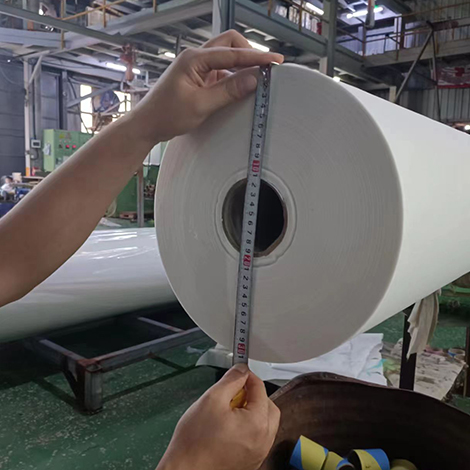
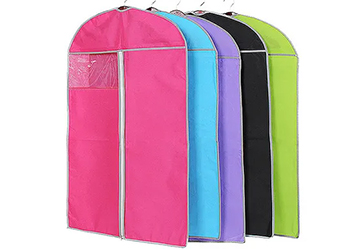
Henghua is a leading manufacturer of PP (Polypropylene) spunbond nonwoven fabric based in Fuzhou city.As one of the largest production houses in China, we operate six advanced production lines with extra two re-roller equipment.Our facilities with covers an area of 3400 square meter workshop. The gross investment arrive 100 millian YUAN.   We take pride in more than 22 years of experience in working with nonwoven fabrics.We pick only the best raw materials of Polypropylene for our products.Our customer are located all over the world.We continuously invovate our production to stay relevant.   Believe in reliable operations & consistent quality Each year, we manufacture 10,000 metric tons of quality polypropylene spunbonded non-woven fabrics from 10gram square meter to 250gram square meter and width range from 15-260cm. Our products are widely used in package industry, medical, home textile,furniture and agriculture fields, such as Shopping bags,suit bags,strorage box,face mask,pillow cover,sofa spring cover,fruit bags.. Henghua Nonwoven products are selling well in country and region such as South America, Southeast Asia, Africa, Southern Europe and South Asia. And we have been getting reputation from customers widely.  

Soclal sharing

Contact Us
Need help? +86 -591-28839008

E-mail : marketing@henghuanonwoven.com

Add : No.260 Liqi Road Hangcheng Street, Changle District, Fuzhou City, Fujian Province, China

Sign Up To Newsletter

Subscribe

Copyright @ 2026 Fuzhou Heng Hua New Material Co., Ltd. All Rights Reserved. Network Supported

Blog Sitemap Xml Privacy Policy

leave a message

leave a message
If you are interested in our products and want to know more details,please leave a message here,we will reply you as soon as we can.
submit

Home

Products

contact

Enter product details (such as color, size, materials etc.) and other specific requirements to receive an accurate quote.
leave a message
If you are interested in our products and want to know more details,please leave a message here,we will reply you as soon as we can.
Submit