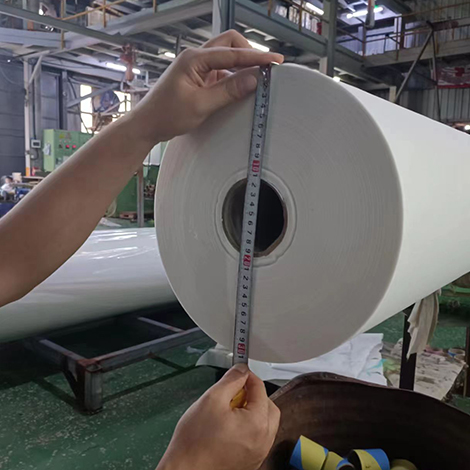

In today's rapidly evolving industrial landscape, material innovation often emerges not from creating entirely new substances, but from discovering novel applications for existing ones. Such is the case with spunbond polypropylene nonwoven fabric—a material whose fundamental properties have been well-established, yet whose potential continues to expand into surprising new territories. At Fuzhou Henghua New Material Co., Ltd., we’ve witnessed firsthand how our clients across diverse industries are leveraging customized spunbond fabrics to solve unique challenges and create innovative products. This exploration moves beyond traditional uses to reveal five cutting-edge applications that demonstrate the material’s remarkable adaptability and why customization matters more than ever.
Modern urban planning faces escalating challenges from increasingly intense rainfall events and aging infrastructure. Engineers are now turning to engineered spunbond nonwovens as critical components in next-generation drainage and erosion control solutions.
The Innovation: Unlike traditional geotextiles that simply separate soil layers, advanced spunbond fabrics are now being designed with gradient density structures—lighter on one side for optimal filtration, heavier on the opposite for durability. These intelligent fabrics are integrated into permeable pavement systems, green roof assemblies, and modular retaining walls where they perform multiple simultaneous functions: filtering sediment while maintaining water flow, preventing soil migration while allowing root penetration for vegetation, and providing tensile reinforcement while remaining flexible during ground movement.
Customization Advantage: This application demands precise engineering. Our capability to produce variable weight fabrics (from 80 to 200gsm) with controlled porosity allows urban planners to specify materials that match exact hydraulic conductivity requirements for their specific soil conditions and precipitation patterns. Furthermore, our width customization up to 255cm enables seamless installation in large-scale infrastructure projects without disruptive seams that compromise system integrity.
The automotive industry’s rapid transition toward electric vehicles and sustainable manufacturing has created unprecedented demand for advanced interior materials that address new priorities: weight reduction, superior acoustics, and circular economy principles.
The Innovation: Spunbond nonwovens are replacing traditional foams and composites in door panel insulators, headliners, and trunk liners with remarkable results. Their three-dimensional structure naturally dampens sound across a broader frequency range than homogeneous materials, significantly reducing road and motor noise in cabin environments. Additionally, as automakers pursue ambitious sustainability goals, mono-material interior components (all polypropylene) have become highly desirable for end-of-life recyclability. Spunbond fabrics are now being thermoformed into complex shapes alongside compatible polypropylene substrates, creating completely recyclable interior modules.
Customization Advantage: Different vehicle segments require different acoustic profiles. Our ability to fine-tune fabric density and thickness allows automotive engineers to target specific noise frequencies for suppression—crucial for luxury vehicles versus economy models. Additionally, we can incorporate recycled polypropylene content without compromising performance, supporting manufacturers’ sustainability certifications. The material’s natural resistance to moisture and mildew also addresses longevity concerns in diverse climates.
As controlled-environment agriculture expands to address food security challenges, the materials supporting plant growth require reimagining. Spunbond nonwovens are emerging as vital components in high-tech horticulture systems that demand precision, consistency, and biological neutrality.
The Innovation: In aeroponic and hydroponic systems, specially engineered spunbond fabrics serve as plant support matrices that anchor roots while optimizing air and nutrient solution distribution. Unlike traditional substrates like rockwool or coir, spunbond offers consistent structural integrity throughout the growth cycle and can be sterilized and reused multiple times. Perhaps more innovatively, these fabrics are being integrated into IoT-enabled smart farms as sensor substrates—their consistent material properties providing reliable platforms for moisture, pH, and nutrient sensors that monitor plant health in real time.
Customization Advantage: Different crops have radically different root system requirements. Our customization capabilities allow vertical farmers to select fabrics with precisely engineered pore sizes that balance mechanical support with root oxygenation. We can produce ultra-thin fabrics (as low as 15gsm) for microgreen production or reinforced composites for larger fruiting plants. Furthermore, the ability to customize fabric color—particularly reflective white or light-diffusing options—allows growers to optimize their artificial lighting efficiency, a critical factor in energy-intensive indoor agriculture.
While spunbond nonwovens have long been staples in disposable medical products, their role is expanding into active therapeutic devices that interact dynamically with the human body.
The Innovation: Researchers are developing bioactive spunbond dressings that incorporate medicinal compounds within the fiber structure itself, allowing controlled release over extended periods. Other advancements include electroconductive nonwovens embedded with silver or carbon that monitor wound pH and temperature while preventing infection. Perhaps most remarkably, spunbond fabrics are serving as scaffolding materials in tissue engineering, where their consistent porosity and biocompatibility support cell growth for skin regeneration and other applications.
The fashion industry's urgent need for sustainable alternatives to conventional textiles has led to surprising innovations with spunbond nonwovens, creating garments that challenge traditional notions of what clothing can be.
The Innovation: Forward-thinking designers are creating fully fashioned nonwoven garments that require no cutting or sewing, dramatically reducing waste in the production process. These aren't disposable items but durable pieces that leverage the inherent qualities of engineered fabrics: consistent insulation properties, natural breathability, and remarkable packability. In technical apparel, laminated spunbond composites are creating weather-resistant yet breathable outer layers that compete with traditional woven technical fabrics at a fraction of the environmental footprint in production.
These innovative applications share a common thread: they require materials engineered for specific performance parameters rather than generic, off-the-shelf solutions. At Fuzhou Henghua New Material Co., Ltd., we've built our entire operation around this understanding. Our 10-250gsm weight range isn't just a specification—it's a toolbox for engineers. Our 15-255cm width flexibility isn't just a capability—it's a waste-reduction strategy for our clients. Our unlimited color and length customization isn't just a service—it's how we help brands express their identity through material choices.
The true innovation in today's industrial landscape often happens at the intersection of material science and application-specific engineering. By treating each project as a unique challenge rather than a standard order, we help our clients transform creative concepts into manufacturable realities. The applications highlighted here represent just the beginning—as industries continue to evolve, so too will the innovative uses of this remarkably adaptable material.
The journey from concept to commercial product increasingly depends on material partnerships that provide more than just supply—they provide technical collaboration, customization expertise, and adaptive problem-solving. The five applications explored here demonstrate that even well-established materials like spunbond nonwoven fabric continue to reveal new potentials when viewed through the lens of specific challenges and opportunities.
What challenge could spunbond nonwoven help you solve? Whether you're developing next-generation infrastructure, sustainable consumer products, or breakthrough medical devices, the material foundation you choose will significantly influence your success. At Fuzhou Henghua, we specialize in translating application requirements into precisely engineered material specifications.
We invite you to share your innovation challenge with our technical team. Through collaborative consultation, we'll help determine if customized spunbond nonwoven fabric could provide your solution—and if so, what specific characteristics would optimize performance. Sometimes the most innovative solutions begin not with a new material, but with a new application for an existing one.
Next Steps for Innovators:
Request our Innovation Case Studies Portfolio to see detailed examples of how customized spunbond fabrics have solved specific challenges across industries. For a direct technical consultation, submit your project parameters through our online form to receive preliminary specification recommendations within 48 hours. Let's explore what's possible when material engineering meets creative application.

Soclal sharing


E-mail : marketing@henghuanonwoven.com
Add : No.260 Liqi Road Hangcheng Street, Changle District, Fuzhou City, Fujian Province, China
Copyright @ 2026 Fuzhou Heng Hua New Material Co., Ltd. All Rights Reserved.  Network Supported
leave a message
Scan to Wechat :

Scan to WhatsApp :