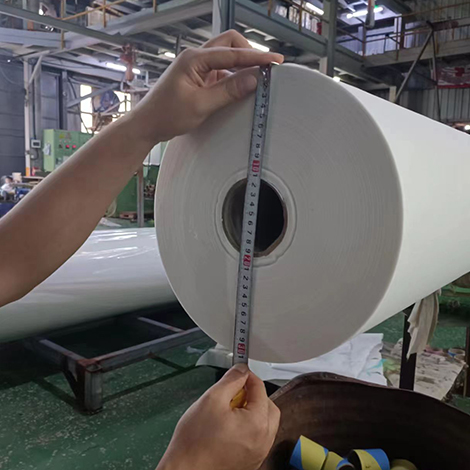

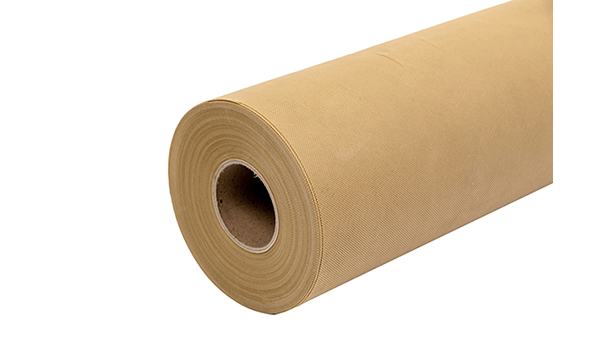
PP spunbond non-woven fabric is a nonwoven fabric material made mainly from polypropylene (PP) through spunbond technology. Its core characteristics are light weight, high tensile strength, and good permeability, which are widely used in the fields of building materials, home decoration, protective equipment, and outdoor products. According to the differences in craftsmanship, this type of material can be further divided into short fiber non-woven fabric (such as picnic mat grass proof fabric) and long fiber spunbond fabric (such as non-woven fabric for masks), with different forms meeting the diverse needs of various scenarios.
1、 Technical principles and core components:
The production of PP spunbond nonwoven fabric relies on the spunbond process: polypropylene particles are melted and extruded through a spinneret to form continuous filaments, which are then fixed into a web by hot air bonding or chemical bonding. Its core components include PP (polypropylene), PA (nylon), and PET (polyester) short fibers, which are combed into a net process to ensure uniform fiber distribution. The material thickness is usually 0.9 millimeters, with a weight range of 9-100 grams per square meter. The elongation rate can reach 25% -100%, and the bursting strength can reach 2.5 kilonewtons, which can withstand large external forces without damage.
2、 Functional features and scene adaptation:
The core advantage of this material lies in the balance between "lightweight" and "high strength". Its weight is only one-third of traditional fabrics, but its tensile strength is 2-3 times that of ordinary non-woven fabrics, making it suitable for scenarios that require load-bearing or tear resistance. In terms of permeability, the microporous structure between fibers allows water vapor to pass through while blocking particulate matter, making it a key material for the middle layer of KN95 masks. In outdoor applications, such as picnic mat grass proof cloth, its UV resistance and anti-aging characteristics can extend the service life, while the rectangular crimpable shape is convenient for storage and transportation.
3、 Usage and precautions:
The installation of PP spunbond non-woven fabric needs to be adjusted according to the scene. For example, when used as a grass proof cloth, the material should be spread flat on the surface of the soil, and the edges should be fixed with soil or stones to avoid being blown up by the wind; When used as a mask material, it needs to be combined with other layers (such as meltblown fabric) and fixed by ultrasonic welding. When stored, the material can adapt to various environmental conditions, but it is necessary to avoid long-term exposure to strong acid and alkali environments to prevent fiber degradation. Before construction or use, it is recommended to check whether the materials are damaged to ensure complete performance.
4、 Technical highlights and actual performance:
Compared with traditional geotextiles, the combing process of PP spunbond nonwoven fabric reduces the risk of fiber breakage and increases the bursting strength by about 40%. In the permeability test, its water vapor transmission rate can reach 2000g/(㎡· 24h), much higher than the 500g/(㎡· 24h) of ordinary non-woven fabric. In addition, the material has strong recyclability, and the PP component can be melted and granulated, which meets environmental requirements. These characteristics make it widely used in fields such as landscaping engineering, agricultural coverage, and medical protection nationwide.

Soclal sharing


E-mail : marketing@henghuanonwoven.com
Add : No.260 Liqi Road Hangcheng Street, Changle District, Fuzhou City, Fujian Province, China
Copyright @ 2026 Fuzhou Heng Hua New Material Co., Ltd. All Rights Reserved.  Network Supported
leave a message
Scan to Wechat :

Scan to WhatsApp :