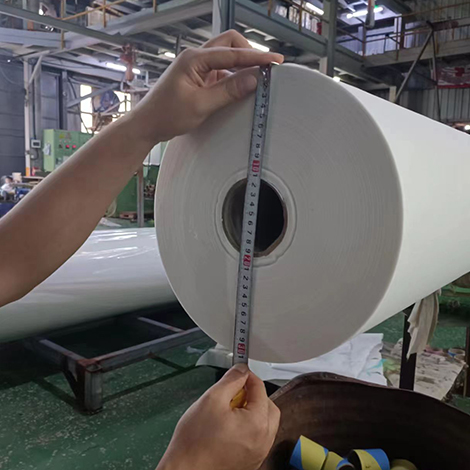

1.In the field of modern non-woven materials, PP spunbond non-woven fabric has become the basic selection material for multiple industrial processes due to its stable physical properties. This type of material is produced through continuous processes such as spinning, stretching, mesh laying, and hot rolling, and its production process determines the characteristic of balanced distribution of longitudinal and transverse strength.
2.From the perspective of raw materials, polypropylene spunbond nonwoven fabric is a common category in the market. Polypropylene slices are melted at high temperatures to form continuous filaments, which give the finished product good elongation at break and tear resistance. Many non-woven fabric manufacturers adjust the hot rolling point shape and roll temperature according to the end use, in order to control the balance between softness and stiffness. Compared to traditional textile fabrics, spunbond nonwoven fabrics have lower production energy consumption, and the scraps can be recycled and pelletized again, which reduces material loss.
3.Waterproof non-woven fabric has become a practical solution for outdoor or humid environments. By adding hydrophobic components to spinning oil agents or finishing aids, the contact angle can exceed 90 degrees, and the liquid forms rolling on the surface instead of permeation. This feature has direct applications in medical protection, hygiene products, agricultural coverage, and civil engineering drainage board wrapping. Meanwhile, by adjusting the amount of hydrophilic masterbatch added, a selectively wettable surface that is permeable to moisture can also be obtained while maintaining mechanical strength.
4.When in contact with PP spunbond non-woven fabric, attention should be paid to the matching of its thermal shrinkage rate and operating temperature. The Vicat softening point of polypropylene material is about 150 degrees Celsius, and long-term heating may cause microstructural changes. Non woven fabric manufacturers generally indicate the difference between longitudinal and transverse heat shrinkage in the product specification sheet, and the purchaser can propose directional requirements based on actual processing techniques such as heat sealing and ultrasonic welding.
5.From an environmental perspective, PP spunbond nonwoven fabric has recyclable properties. Some companies use recycled polypropylene to prepare colored or core layers, forming a two-component structure that maintains the overall strength of the material while reducing raw material costs. Whether it's agricultural weed proof fabric, furniture padding, or shopping bags, the lightweight and corrosion-resistant characteristics of these materials result in longer replacement cycles. For engineering scenarios that require both strength and water repellent performance, polypropylene spunbond water repellent non-woven fabric can be a reliable option.

Soclal sharing


E-mail : marketing@henghuanonwoven.com
Add : No.260 Liqi Road Hangcheng Street, Changle District, Fuzhou City, Fujian Province, China
Copyright @ 2026 Fuzhou Heng Hua New Material Co., Ltd. All Rights Reserved.  Network Supported
leave a message
Scan to Wechat :

Scan to WhatsApp :