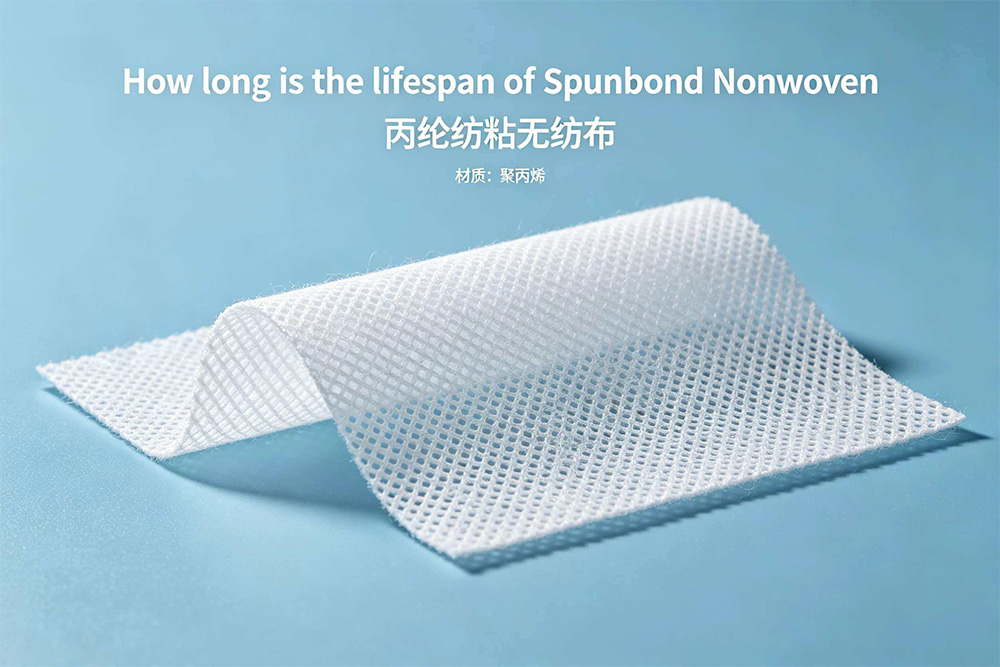
How long is the Lifespan of Spunbond Nonwoven
Jun 17, 2026
Whether you're using spunbond for packaging, medical supplies, furniture components, or agricultural covers, you need to know how long it will perform — and when it might fail.
The short answer? It depends. The lifespan of single-layer spunbond ranges from a few weeks (in extreme UV exposure) to over 10 years (in controlled indoor conditions).
Let's break down the factors that determine longevity.
What Determines the Lifespan of Spunbond Nonwoven?
Several factors influence how long spunbond fabric will last. Understanding them will help you choose the right specification for your application.
1. UV (Sunlight) ExposurePolypropylene is sensitive to ultraviolet radiation. Prolonged exposure to sunlight breaks down the polymer chains, causing the fabric to become brittle, lose strength, and eventually crack.
Without UV stabilizers: 3–6 months outdoors
With UV stabilizers: 1–3 years outdoors
Indoors (no UV): 5 to 8years, even 10+ years
2. Temperature & HeatPP spunbond is stable at room temperature and moderate heat. However:
Continuous exposure above 80°C (176°F) accelerates aging
At 150°C (302°F), the fabric begins to soften and shrink
At 160–170°C, it melts
For most indoor applications, heat is not a concern.
3. Chemical ExposurePolypropylene is chemically inert — it resists most acids, alkalis, and solvents. However:
Strong oxidizing agents (bleach, peroxides) will degrade it
Hydrocarbon solvents (gasoline, oil) can soften or swell the fabric
Acid rain has minimal effect
4. Mechanical StressTension, friction, and repeated stretching will eventually weaken the fabric. But for normal use, spunbond's continuous filament structure provides excellent fatigue resistance.
5. Antioxidant AdditivesQuality spunbond contains antioxidants that prevent oxidation (a slow degradation process caused by oxygen). Without antioxidants, the fabric will yellow and lose strength over years of storage.
Expected Lifespan by Application
Application Typical Conditions Expected Lifespan
Medical masks & gowns
Indoor, climate-controlled
2–5 years (shelf life)Single use (in use)
Sterile packaging
Indoor, sealed storage
3–5 years
Rice/flour bags
Warehouse (limited sunlight)
1–3 years (in use)
Furniture dust covers
Indoor, no UV exposure
3–5 years (normal use)
Agricultural ground covers
Outdoor, continuous UV
1–2 years (with UV stabilizers)
Geotextiles (underground)
Underground, no UV
20+ years
Shopping bags (reusable)
Mixed indoor/outdoor
1–2 years (regular use)
Shelf Life of Spunbond Rolls (Before Use)
If you're storing spunbond rolls in your warehouse, here's what to expect:
Storage Condition Recommended Shelf Life Notes
Climate-controlled (20–25°C, 50% RH)
3–5 years
Antioxidants protect against degradation
Hot, humid warehouse (30–40°C, high RH)
1–2 years
Heat accelerates aging; moisture has minor effect
Sunlight exposure (direct UV)
3–6 months
Avoid storing near windows or outdoors
Storage Tip: Store spunbond rolls on pallets, away from direct sunlight, in a cool (under 30°C), dry environment. Cover with dark sheeting to protect from dust and moisture,especially when fabric close window.
How to Tell If Your Spunbond Has Degraded
Signs that the fabric is nearing the end of its useful life:
Yellowing or browning — oxidation is occurring
Loss of strength — tears easily when stretched
Surface cracking — visible micro-cracks, especially after folding
Reduced elongation — fabric feels stiff and rigid
Pilling or powdering — polymer chains are breaking down
How to Extend the Lifespan
For customers who need longer-lasting spunbond, here are the options:
1. Add UV StabilizersUV stabilizers absorb or block UV radiation, dramatically extending outdoor life. For agricultural covers and outdoor packaging, we strongly recommend UV-stabilized spunbond.
2. Use AntioxidantsStandard in all quality spunbond, antioxidants prevent oxidation during storage and normal use. Higher antioxidant levels can extend shelf life significantly.
3. Choose Higher GSMA heavier fabric (e.g., 100gsm vs 50gsm) has more polymer mass to absorb degradation before failing. For outdoor applications, we recommend minimum 90–100gsm with UV stabilizers.
4. Coat or Laminate (Optional)For extreme conditions, spunbond can be coated or laminated with film layers, adding protection from UV and moisture. This is more expensive but greatly extends lifespan.
Testing Methods for Longevity
When we test spunbond durability, we use accelerated aging methods:
Test MethodWhat It MeasuresStandard
Oven aging (heat)
Heat resistance, oxidation
ASTM D5510
QUV accelerated weathering
UV resistance
ASTM G154
Xenon arc weathering
Full-spectrum light degradation
ASTM G155
Tensile retention test
Strength loss over time
ASTM D5034
What Our Customers Actually Experience
Based on real-world feedback from our customers across different industries:
Medical manufacturers: Standard spunbond rolls store well for 3–5 years in climate-controlled warehouses. Masks and gowns used within 2 years of production.
Rice mills (Southeast Asia): 80–90gsm spunbond bags last 12–24 months in warehouse conditions, with occasional UV exposure.
Furniture makers: Dust covers last the lifetime of the furniture — 10+ years — because they're protected indoors.
Farmers (agricultural covers): With UV-stabilized 100gsm spunbond, expect 1–2 seasons (12–24 months) of outdoor use.
The Bottom Line
Single-layer PP spunbond nonwoven is a durable, long-lasting material when used in the right conditions. Indoors, it will outlast most product lifecycles. Outdoors, it needs UV stabilizers to survive beyond a few months.
The key is matching the additive package (UV stabilizers, antioxidants) and basis weight to your specific application.
Looking for a reliable supplier of PP spunbond nonwoven rolls? We manufacture single-layer spunbond from 10gsm to 250gsm, with optional UV stabilizers for extended lifespan.
Contact us for samples or a quote – Let's discuss your durability requirements.







 Network Supported