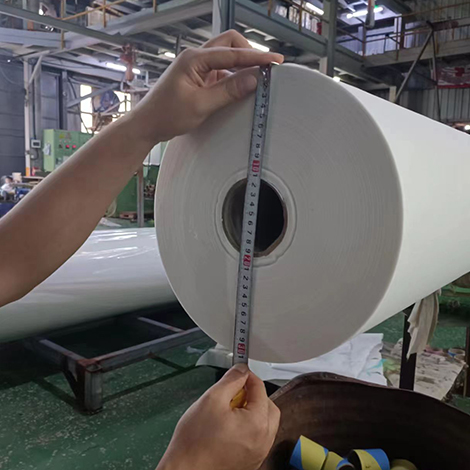

The core information of antibacterial PP spunbond non-woven fabric is as follows:
1、 Core Technology and Performance
The mainstream adopts a silver zinc composite inorganic slow-release antibacterial system, which is processed through melt blending or post finishing dipping and rolling processes, with an antibacterial rate of ≥ 99.9% against common pathogenic bacteria such as Escherichia coli and Staphylococcus aureus. It is resistant to high temperatures and compatible with spunbond processes, skin friendly and non irritating, in compliance with RoHS and REACH environmental regulations, and does not damage the basic physical properties such as breathability and stretchability of the fabric.
2、 Mainstream application scenarios
1. In the field of medical and health care: used for disposable protective clothing, surgical drapes, medical masks, and disinfectant bags, meeting medical grade hygiene compliance requirements;
2. In the field of maternal and child hygiene: as the surface layer of diapers, the bottom fabric of sanitary napkins, and the substrate of urine isolation pads, to prevent bacterial growth;
Household daily use areas: pet pads, dust removal wiping cloths, non-woven fabric lining for home textiles, to suppress odors and mold growth;
3. Industrial filtration field: spunbond filtration substrates for fresh air and air conditioning to prevent bacterial growth after long-term use of the filter materials.
3、 Selection criteria and procurement considerations for PP spunbond nonwoven fabric
1. Core selection criteria
1. Basic parameters: Prioritize confirming that the weight and width match the production equipment. Choose 20-50g/㎡ for conventional sanitary material scenarios and 40-60g/㎡ for medical protection scenarios, balancing strength and breathability.
2. Antibacterial grade: Basic models with antibacterial rate ≥ 90% must be selected for ordinary civilian scenarios, while medical/maternal and child scenarios must meet AATCC 100 and GB/T 20944.1 standards with antibacterial rate ≥ 99%.
2. Virtual label identification method
1. Do not rely solely on verbal promises from the manufacturer. It is necessary to request an antibacterial performance testing report issued by a third-party authoritative organization to verify whether the testing standards match your usage scenario.
2. After receiving the sample cloth, you can conduct a simple test on your own: cover the contaminated sample on the surface of the cloth and culture for 24 hours, compare it with ordinary non-woven fabric to observe the growth of bacterial colonies, and preliminarily verify the antibacterial effect.
3. Procurement landing process
1. First, clarify the usage scenario and performance requirements with the manufacturer, apply for free sample fabric, complete the full performance verification, and then place a small batch trial order to confirm that the fabric is fully compatible with our own production process. Then, proceed with large-scale orders to reduce trial and error costs.
In July 2026, the mainstream ton price of this category was in the range of 12000-15000 yuan. Products that are much lower than this price are likely to have insufficient addition of antibacterial masterbatch and performance that does not meet the standards. It is important to pay close attention to this when purchasing.

Soclal sharing


E-mail : marketing@henghuanonwoven.com
Add : No.260 Liqi Road Hangcheng Street, Changle District, Fuzhou City, Fujian Province, China
Copyright @ 2026 Fuzhou Heng Hua New Material Co., Ltd. All Rights Reserved.  Network Supported
leave a message
Scan to Wechat :

Scan to WhatsApp :