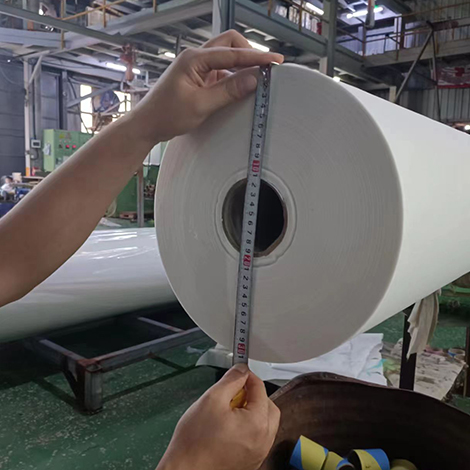

Flame retardant PP (polypropylene) spunbond nonwoven fabric is widely used in fields with high requirements for fire safety due to its lightweight, chemical corrosion resistance, strong processability, and excellent flame retardant properties. The following is an analysis of its typical application scenarios and technical characteristics:
1. Construction and building materials field
Fireproof isolation material
Used for wall insulation layer (such as flame-retardant coating layer of rock wool/PET composite material), passing the EN 13501-1 fire rating test (such as B1 level).
Advantages: It replaces traditional fiberglass cloth, avoids skin irritation, and has a low weight (50-100g/m ²) that does not affect structural load.
Roof waterproofing substrate
As a reinforcement layer of modified asphalt waterproofing membrane, its flame retardant performance meets the GB 8624-2012 standard.
2. Interior of transportation vehicles
Automotive/high-speed rail/aviation interior
The seat is filled with fire-resistant layer and ceiling lining fabric, and tested according to FMVSS 302 (vertical burning ≤ 100mm/min) or DIN 75200.
Technical requirements: It is necessary to balance flame retardancy (LOI ≥ 28%) and low VOC (volatile organic compound) emissions, usually using a phosphorus nitrogen synergistic flame retardant system.
Battery separator material
Used as insulation layer for new energy vehicle battery packs, requiring high temperature resistance (above 150 ℃) and no melting droplets (UL-94 V0 level).
3. Personal protective equipment
Firefighting suit/industrial protective suit
As an outer barrier material or comfortable inner layer, it needs to pass the EN 11612 (thermal radiation protection) standard and is often used in combination with aramid fibers.
Medical protective equipment
The outer layer of surgical gowns and masks (weighing 20-40g/m ²) has passed the GB 19082-2009 flame retardant and anti-static dual function test.
4. Home and Public Facilities
Flame retardant furniture lining fabric
Sofa and mattress fire-resistant layer, in compliance with American CAL 117 (smoldering test) or British BS 5852 standard.
Decorative materials for public places
Hotel and theater curtains/wall coverings are required to be flame retardant and smoke suppressing (smoke density rating ≤ 75, GB/T 8627).
5. Industry and Packaging
High temperature filter material
Industrial smoke and dust filter bags (such as cement plants) need to have a temperature resistance of over 120 ℃, and aluminum hydroxide (ATH) is used as a flame retardant to have both smoke suppression properties.
Electronic device packaging
Precision instruments come with anti-static and flame-retardant packaging, with surface resistance controlled between 10 ⁶ and 10 ⁹ Ω (with the addition of carbon black or metal oxides).
6. Emerging fields
New energy equipment
The photovoltaic backsheet barrier layer needs to undergo UV aging testing (with a strength retention rate of ≥ 80% after 1000 hours).
Smart Textiles
Combining conductive fibers (such as silver fibers) to prepare flame-retardant intelligent heating suits, with synergistic design of flame retardancy and electrical thermal stability.

Soclal sharing


E-mail : marketing@henghuanonwoven.com
Add : No.260 Liqi Road Hangcheng Street, Changle District, Fuzhou City, Fujian Province, China
Copyright @ 2026 Fuzhou Heng Hua New Material Co., Ltd. All Rights Reserved.  Network Supported
leave a message
Scan to Wechat :

Scan to WhatsApp :