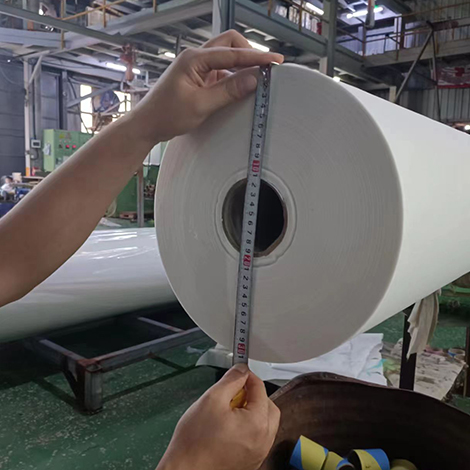

PP (polypropylene) spunbond nonwoven fabric has become one of the mainstream materials in the nonwoven field due to its advantages of low cost, good processability, and adjustable performance. With the improvement of environmental protection requirements and technological progress, its development prospects are mainly reflected in the following aspects:
1. Market demand growth
Medical and hygiene products:
After the global pandemic, the demand for medical protective clothing, masks, surgical drapes, and other materials continues to grow. PP spunbond non-woven fabric has become the preferred material due to its lightweight, breathable, and disinfectable properties.
The average annual growth rate of the disposable hygiene products (such as diapers and sanitary napkins) market is about 5% to 7% (2023-2030).
Packaging and Agriculture:
Environmentally friendly packaging (recyclable PP non-woven bags) is replacing traditional plastic bags, and the demand for agricultural cover fabrics (weather resistant, biodegradable modified PP) is increasing.
2. Driven by technological innovation
High performance flame-retardant PP non-woven fabric:
Develop halogen-free flame retardant systems (such as expansion flame retardant IFR, nano magnesium hydroxide) to meet EU REACH and RoHS regulations.
Multi functional composite: flame retardant+antibacterial (silver ion/quaternary ammonium salt), flame retardant+anti-static (carbon black/graphene coating).
Degradability and circular economy:
Bio based PP (such as Braskem bio PP extracted from sugarcane) is combined with biodegradable additives (such as PBAT blend) to partially replace traditional petroleum based PP.
Chemical recycling technologies (such as pyrolysis or solvent methods) reduce waste PP non-woven fabrics into monomers, achieving closed-loop utilization.
3. Emerging application areas
New Energy and Electronics Industry:
Lithium battery separator (PP non-woven fabric substrate coated with ceramic layer) requires high porosity (40%~60%) and thermal stability (>200 ℃).
Flexible electronic substrate (such as ultra-thin PP non-woven fabric for sensors, thickness<20 μ m).
Intelligent textiles:
Intelligent heating clothing, pressure sensing pads, etc. that integrate conductive fibers such as carbon nanotubes/PP composites.
4. Environmental Protection and Sustainable Development
Green manufacturing process:
Reduce production energy consumption (such as optimizing melt blown processes, reducing energy consumption by 20% to 30%).
Promotion of environmentally friendly post-treatment technologies such as water-based ink printing and fluorine free waterproofing agents.
Policy promotion:
China's' plastic ban 'promotes the market for reusable PP non-woven bags; The EU SUP (Single Use Plastic) regulation encourages recyclable designs.
The future of PP spunbond nonwoven fabric will revolve around three directions: high-performance, green, and intelligent. While maintaining stable growth in traditional fields, emerging areas such as new energy, healthcare, and smart wearables will become breakthrough points. Enterprises need to pay attention to technological upgrades (such as flame retardancy and degradability), policy compliance (such as the EU Green Deal), and the construction of circular economy models to maintain competitiveness.

Soclal sharing


E-mail : marketing@henghuanonwoven.com
Add : No.260 Liqi Road Hangcheng Street, Changle District, Fuzhou City, Fujian Province, China
Copyright @ 2026 Fuzhou Heng Hua New Material Co., Ltd. All Rights Reserved.  Network Supported
leave a message
Scan to Wechat :

Scan to WhatsApp :