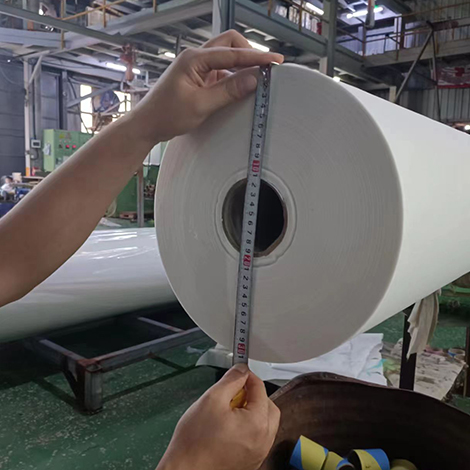


Nonwoven fabric (English name: Non Woven Fabric or Nonwoven cloth), also known as nonwoven fabric, is composed of oriented or randomly arranged fibers. It is referred to as fabric due to its appearance and certain properties resembling those of woven fabric. Simply put, it is not made by interweaving or knotting individual yarns together, but rather by bonding fibers directly through physical or chemical methods. Therefore, when you try to pull out the threads from your clothing, you won't be able to separate them into individual strands.
1.Characteristics of Nonwoven Fabric
Non-woven fabric lacks warp and weft threads, making it highly convenient for cutting and sewing. It is lightweight and easy to shape. By breaking through traditional textile principles, non-woven fabric features short process flows, fast production speeds, high output, low costs, wide applications, and diverse raw material sources. Compared to woven fabrics, it has lower strength and durability, and cannot be washed like other types of fabric. Since the fibers are arranged in a specific direction, it tends to split easily at right angles, among other issues. Therefore, improvements in production methods primarily focus on preventing splitting. II. Classification of Nonwoven Fabrics
2.Nonwoven fabric can be categorized based on different production processes:
◆Water Needle Felt
It involves spraying high-pressure fine water jets onto one or more layers of fiber web, causing the fibers to intertwine and thereby reinforcing the web to achieve a certain strength. Features: 1. Flexible entanglement, which does not affect the original characteristics of the fibers or damage them. 2. The appearance is closer to that of traditional textiles. 3. High strength and low pilling tendency. 4. High moisture absorption, rapid wicking. 5. Soft to the touch, with excellent draping. 6. The exterior features a variety of patterns. 7. The production process is lengthy and requires a large footprint. 8. The equipment is complex, energy-intensive, and requires high water quality standards. Product Applications: Medical curtains, surgical gowns, surgical drapes, medical bandage materials, wound dressings, medical gauze, aviation wipes, clothing lining fabric, coated base fabric, high-end wipes for the electronics industry, cosmetic pads, wet wipes, mask cover materials, etc.
◆Hot-melt nonwoven fabric
It refers to the process of adding fibrous or powdered thermoplastic bonding reinforcement materials to the web, which is then heated, melted, and cooled to form a fabric. Features: The surface of hot-rolled bonding with adhesive is relatively smooth, while that of hot-rolled bonding with points is relatively fluffy. Product Applications: Used in the production of baby diaper and feminine hygiene product cover materials, medicated cloth, clothing linings, masks, and more.
◆ Air-laid nonwoven fabric from pulp It can also be referred to as dust-free paper or dry-process nonwoven fabric. This material is produced using air-laid web technology, where wood pulp fibers are loosened into a single-fiber state, then aggregated onto a forming screen via airflow, and finally reinforced into fabric. Features: Excellent loftiness, soft texture, and superior moisture absorption. Product Application: Medical hygiene materials, particularly high-absorbency disposable hygiene products (such as diapers, sanitary pads, wet wipes, cleaning cloths, etc.).
◆Wet-laid nonwoven fabric
The process involves loosening fiber raw materials placed in a water medium into individual fibers while mixing different fiber materials to form a fiber suspension slurry. The suspension slurry is then transported to a forming network mechanism, where the fibers are formed into a web in a wet state and subsequently reinforced into fabric. Features: 1. High production speed, up to 400m/min. 2. It can fully utilize short fibers. 3. The product's fiber web exhibits good uniformity. 4. High water consumption and substantial one-time investment. Product Application: 1. Specialty Paper: Dust/Liquid Filter Paper, Tea Bags. 2. Industrial use: Filters, insulating materials, sound-absorbing materials. 3. Medical use: Medical backings, medical tapes, and surgical package wrapping materials. 4. Civilian: Wallpaper, etc.
◆Spunbond Nonwoven Fabric
After the polymer has been extruded and stretched to form continuous filaments, the filaments are laid into a web. The web is then transformed into nonwoven fabric through self-bonding, thermal bonding, chemical bonding, or mechanical reinforcement methods. Features: 1. The web is composed of continuous filaments. 2. Excellent tensile strength. 3. Due to frequent process variations, multiple reinforcement methods can be employed. 4. The filament fineness has a wide range of variation. Product Application: 1. Polypropylene (PP): Geotextiles, tufted carpet base fabric, coated backing fabric, medical and hygiene materials, and wrapping materials for disposable products. 2. Polyester (PET): Filter material, lining material, tufted carpet base fabric, agricultural material, packaging material, etc.
◆Melting blow nonwoven fabric
The process of melt-blown nonwoven fabric: polymer feeding—melt extrusion—fiber formation—fiber cooling—web formation—reinforcement into fabric. Features: The web is composed of extremely fine and short fibers. 2. The web exhibits excellent uniformity and a soft hand feel. 3. Excellent filtration and liquid absorption performance. 4. The web strength is relatively poor. Product Applications: Filtration materials, medical and hygiene materials, fabric materials, battery separator materials, wiping materials.
◆ Needle-punched nonwoven fabric
It is a type of dry-spun nonwoven fabric, where the needling process uses the piercing action of needles to reinforce a fluffy fiber web into fabric. Features: 1. The flexible entanglement between fibers provides excellent dimensional stability and elasticity. 2. Excellent permeability and filtration performance. 3. Rich and fluffy texture. 4. Various collective patterns or three-dimensional molded products can be manufactured as per requirements.
Our company's product recommendations:

Soclal sharing


E-mail : marketing@henghuanonwoven.com
Add : No.260 Liqi Road Hangcheng Street, Changle District, Fuzhou City, Fujian Province, China
Copyright @ 2026 Fuzhou Heng Hua New Material Co., Ltd. All Rights Reserved.  Network Supported
leave a message
Scan to Wechat :

Scan to WhatsApp :