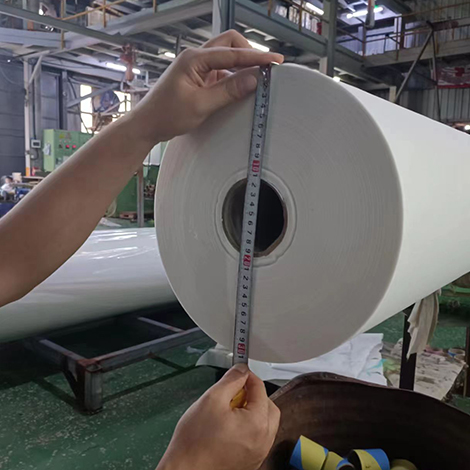
Polyproyplene Spunbond Nonwoven Roll application at furniture spring cover
May 12, 2026
From a Nonwoven Roll Manufacturer to the Furniture Industry
What separates a high-end sofa from an average one? Leather? Design? Brand? Partly yes. But often, the difference is hidden under the cushions — in the materials you never see.
One of those invisible workhorses is polypropylene spunbond nonwoven fabric, specifically when used as a spring cover (also called spring wrap or cushion backing).
Let's dive into why furniture manufacturers worldwide trust spunbond nonwoven for this critical application.
What Is a Spring Cover?
Inside nearly every upholstered sofa, armchair, or mattress, there is a system of metal springs. These springs provide support and comfort. Between the springs and the foam cushion (or top upholstery layer), manufacturers place a spring cover — a fabric layer that acts as a separator and insulator.
Traditionally, this layer was made from woven fabrics or mesh. Today, more and more factories are switching to PP spunbond nonwoven.
Why Spunbond Nonwoven for Spring Covers?
Here are the key reasons furniture manufacturers prefer spunbond for spring wrap applications:
1. Noise Reduction (Anti-Squeak)Bare metal springs rubbing against foam or fabric create squeaking sounds over time. Spunbond nonwoven acts as a silent buffer. The soft, continuous filament structure dampens vibration and eliminates metal-on-foam noise.
2. Prevents Spring PunctureSpring tips can be sharp. Under repeated compression (every time someone sits down), springs can slowly poke through foam. A durable spunbond layer — typically 60–90 gsm — provides a tough barrier that resists puncture without adding bulk.
3. Uniform Tear StrengthWoven fabrics tear easily along the weave direction. Spunbond nonwoven offers uniform tear resistance in all directions. This matters during assembly — when workers stretch and staple the fabric over spring units.
4. BreathableSpring covers don't need to be airtight. In fact, breathability is a plus. It allows air and moisture to escape from deep inside the furniture, preventing mold and musty odors over years of use.
5. Cost-EffectiveCompared to woven alternatives, spunbond nonwoven is significantly more affordable while meeting or exceeding performance requirements. For high-volume furniture production, this adds up to real savings.
6. Easy to Cut and StapleSpunbond fabric cuts cleanly with no frayed edges. It's also easy to staple through without tearing. Factory workers can install it faster, reducing assembly time per unit.
Recommended Specifications for Spring Covers
Property
Recommended Value
Basis weight
60–90 gsm (70–80 gsm is most common)
Color
Black (most popular) or White
Width
Customizable to your spring unit size
Material
100% virgin polypropylene
Additives
Antioxidant (for long-term durability)
Spunbond vs. Woven Fabric for Spring Covers
Feature
Woven Fabric
Spunbond Nonwoven
Noise reduction
Moderate
Excellent
Tear strength
Directional (weak along weave)
Uniform (strong in all directions)
Edge fraying
Yes (edges fray over time)
No (clean cut)
Breathability
Good
Excellent
Cost
Higher
Lower
Installation speed
Slower (handles edges fray)
Faster
Who Uses Spunbond Spring Covers?
Sofa and armchair manufacturers – Both residential and commercial (hotels, offices)
Mattress producers – For innerspring mattress construction
Automotive seating suppliers – Car seat foam backing layers
Recliner and motion furniture makers – Where springs move and need silent operation
The Bottom Line
A good spring cover doesn't get noticed. That's the point. It sits silently between the springs and the comfort layers, doing its job year after year.
Polypropylene spunbond nonwoven fabric delivers exactly what furniture makers need: quiet, durable, breathable, and cost-effective spring protection.
If you're manufacturing sofas, chairs, or mattresses — and you want to reduce noise complaints, speed up assembly, and lower material costs — switching to spunbond spring covers is an easy win.
Looking for a reliable supply of spunbond nonwoven for spring covers? We offer custom widths, black or white colors, and basis weights from 50gsm to 90gsm — popular density use 70gsm, exactly what furniture factories need.
Contact us for samples or a quote – Let your furniture work quietly, from the inside out.
marketing@henghuanonwoven.com







 Network Supported