What are the pros and cons of polypropylene fabric?
Jun 26, 2026
From a Nonwoven Roll Manufacturer to You
Polypropylene (PP) fabric is everywhere. From medical gowns and shopping bags to furniture linings and agricultural covers — it's one of the most versatile materials in modern manufacturing.
But like any material, PP fabric has strengths and weaknesses. Understanding both is key to choosing the right fabric for your application.
Let's take an honest, balanced look at the pros and cons of polypropylene fabric.
What Is Polypropylene Fabric?
Polypropylene fabric is a synthetic textile made from polypropylene resin, a thermoplastic polymer derived from petroleum. It can be produced as:
Woven PP — flat tapes woven on a loom (heavy-duty bags, FIBC, tarpaulins)
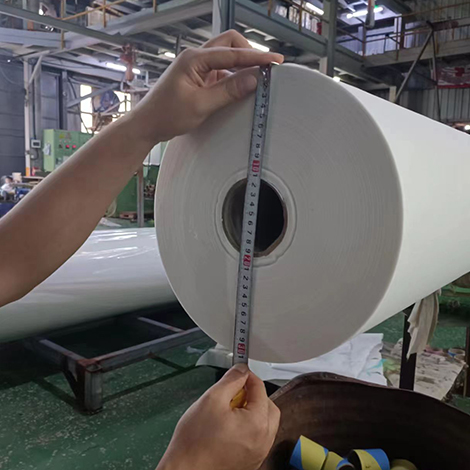
Spunbond nonwoven PP — continuous filaments bonded with heat (medical, hygiene, packaging, furniture)
Meltblown PP — microfibers for filtration (mask filter layers)
In this article, we focus primarily on spunbond nonwoven PP, the most versatile and widely used form.
The Pros of Polypropylene Fabric
1. LightweightPP fabric is extremely light. At comparable strength, it weighs 30–40% less than woven alternatives. This translates to lower shipping costs, easier handling, and less material waste.
2. Durable & Tear-ResistantSpunbond PP has uniform tear strength in all directions — unlike woven fabrics which tear easily along the weave. The continuous filament structure resists puncture and abrasion.
3. Chemical ResistancePP is highly resistant to most acids, alkalis, and solvents. It won't degrade from contact with common chemicals, making it ideal for industrial, agricultural, and medical applications.
4. Breathable Yet ProtectiveSpunbond fabric allows air and moisture vapor to pass through while blocking liquid and fine dust. This unique combination makes it perfect for medical gowns, diaper components, and agricultural covers.
5. Cost-EffectivePP fabric is significantly cheaper than alternatives like cotton, polyester, or laminates. High-speed production (up to 600 m/min) keeps costs low.
6. Excellent Print QualitySpunbond nonwoven has a smooth, paper-like surface that accepts high-quality flexo and gravure printing. Sharp logos, bright colors, and scannable barcodes are easy to achieve.
7. Lint-FreeUnlike cotton or woven fabrics, spunbond PP has no fraying or loose fibers. It cuts cleanly and stays clean — essential for medical, cleanroom, and food packaging applications.
8. RecyclablePP is 100% recyclable and has a well-established recycling stream. It can be reprocessed into new products, reducing environmental impact.
9. Hydrophobic (Water-Repellent)PP naturally repels water. It doesn't absorb moisture, so it stays dry, resists mold, and maintains strength even in humid conditions.
The Cons of Polypropylene Fabric
1. UV SensitivityThis is the biggest drawback. Without UV stabilizers, PP fabric degrades rapidly in sunlight — typically within 2–6 months. The polymer chains break down, causing brittleness, cracking, and loss of strength.
Solution: UV stabilizers can extend outdoor life to 1–3 years.
2. Low Heat ResistancePP begins to soften around 150°C (302°F) and melts at approximately 160–170°C. It's not suitable for high-heat applications or environments where it contacts hot surfaces.
Solution: Use alternative materials (e.g., polyester) for high-heat applications.(we focus on polypropylene)
3. Poor Adhesion Without TreatmentBecause PP is non-polar, adhesives and coatings don't stick easily to untreated surfaces. This can be a challenge for certain bonding or lamination processes.
Solution: Corona treatment or plasma treatment improves surface energy for better adhesion.
4. Static Charge Build-UpPP is an insulator and can generate static electricity, especially in dry conditions. This can attract dust, cause discomfort (in clothing), or interfere with electronic components.
Solution: Antistatic additives or surface treatments are available.
5. Not BiodegradableWhile PP is recyclable, it is not biodegradable. In landfill conditions, it persists for hundreds of years. This is a sustainability concern for single-use products.
Solution: PP is widely recycled; closed-loop programs are growing.
6. Can Be Damaged by Oil and GreaseWhile PP resists most chemicals, it swells and softens when exposed to hydrocarbon solvents — including oils and greases. This limits its use in certain automotive and industrial settings.
Pros and Cons at a Glance
AspectAdvantageDisadvantage
Weight
Lightweight, reduces shipping cost
—
Strength
Uniform tear resistance
Degrades with UV exposure
Chemical resistance
Resists most acids & alkalis
Damaged by oils & solvents
Breathability
Excellent
—
Heat resistance
Good up to ~100°C
Softens at 150°C, melts at 170°C
Printability
Excellent (spunbond)
Poor (woven PP)
Recyclability
100% recyclable
Not biodegradable
Cost
Low cost vs. alternatives
—
How to Overcome the Limitations
Most of PP's disadvantages have practical solutions:
LimitationSolution
UV degradation
UV stabilizers
Low heat resistance
Avoid high-heat applications; use PP only below 100°C continuous
Poor adhesion
Corona treatment, plasma treatment, or primer
Static charge
Antistatic additives (e.g., glyceryl monostearate)
Oil sensitivity
Avoid contact with oils; use coatings if needed
When Should You Choose Polypropylene Fabric?
Choose PP fabric when:
You need lightweight, low-cost material
You require breathability with fluid resistance (medical, hygiene)
You want sharp, colorful print quality (packaging, bags)
The application is indoor or protected from UV (furniture, medical, storage)
You need chemical resistance (agriculture, industrial)
Avoid PP fabric when:
Continuous outdoor UV exposure (unless UV-stabilized)
Operating temperatures above 100°C
Contact with hydrocarbons (oils, gasoline, certain solvents)
Biodegradable materials are required by regulation
The Bottom Line
Polypropylene fabric is not a miracle material — but it is a practical, versatile, and cost-effective solution for a huge range of applications.
Its strengths (lightweight, strong, chemical-resistant, breathable, printable, lint-free) far outweigh its weaknesses (UV sensitivity, heat limitations, oil sensitivity) — especially when you choose the right grade and additive package.
With UV stabilizers, antioxidants, and surface treatments, we can customize PP spunbond to perform in almost any environment.
Looking for a reliable supplier of single-layer PP spunbond nonwoven rolls? We offer customizable solutions with UV stabilizers, antistatic treatments, and other options — all tailored to your application.
Contact us for samples or a quote – Let's find the right PP fabric for your product.
marketing@henghuanonwoven.com







 Network Supported