Blog
Home

PP spunbond advantages

PP spunbond advantages

  • What are the pros and cons of polypropylene fabric? Jun 26, 2026
          From a Nonwoven Roll Manufacturer to You Polypropylene (PP) fabric is everywhere. From medical gowns and shopping bags to furniture linings and agricultural covers — it's one of the most versatile materials in modern manufacturing. But like any material, PP fabric has strengths and weaknesses. Understanding both is key to choosing the right fabric for your application. Let's take an honest, balanced look at the pros and cons of polypropylene fabric.   What Is Polypropylene Fabric? Polypropylene fabric is a synthetic textile made from polypropylene resin, a thermoplastic polymer derived from petroleum. It can be produced as: Woven PP — flat tapes woven on a loom (heavy-duty bags, FIBC, tarpaulins) Spunbond nonwoven PP — continuous filaments bonded with heat (medical, hygiene, packaging, furniture) Meltblown PP — microfibers for filtration (mask filter layers) In this article, we focus primarily on spunbond nonwoven PP, the most versatile and widely used form.   The Pros of Polypropylene Fabric 1. LightweightPP fabric is extremely light. At comparable strength, it weighs 30–40% less than woven alternatives. This translates to lower shipping costs, easier handling, and less material waste. 2. Durable & Tear-ResistantSpunbond PP has uniform tear strength in all directions — unlike woven fabrics which tear easily along the weave. The continuous filament structure resists puncture and abrasion. 3. Chemical ResistancePP is highly resistant to most acids, alkalis, and solvents. It won't degrade from contact with common chemicals, making it ideal for industrial, agricultural, and medical applications. 4. Breathable Yet ProtectiveSpunbond fabric allows air and moisture vapor to pass through while blocking liquid and fine dust. This unique combination makes it perfect for medical gowns, diaper components, and agricultural covers. 5. Cost-EffectivePP fabric is significantly cheaper than alternatives like cotton, polyester, or laminates. High-speed production (up to 600 m/min) keeps costs low. 6. Excellent Print QualitySpunbond nonwoven has a smooth, paper-like surface that accepts high-quality flexo and gravure printing. Sharp logos, bright colors, and scannable barcodes are easy to achieve. 7. Lint-FreeUnlike cotton or woven fabrics, spunbond PP has no fraying or loose fibers. It cuts cleanly and stays clean — essential for medical, cleanroom, and food packaging applications. 8. RecyclablePP is 100% recyclable and has a well-established recycling stream. It can be reprocessed into new products, reducing environmental impact. 9. Hydrophobic (Water-Repellent)PP naturally repels water. It doesn't absorb moisture, so it stays dry, resists mold, and maintains strength even in humid conditions.   The Cons of Polypropylene Fabric 1. UV SensitivityThis is the biggest drawback. Without UV stabilizers, PP fabric degrades rapidly in sunlight — typically within 2–6 months. The polymer chains break down, causing brittleness, cracking, and loss of strength. Solution: UV stabilizers can extend outdoor life to 1–3 years. 2. Low Heat ResistancePP begins to soften around 150°C (302°F) and melts at approximately 160–170°C. It's not suitable for high-heat applications or environments where it contacts hot surfaces. Solution: Use alternative materials (e.g., polyester) for high-heat applications.(we focus on polypropylene) 3. Poor Adhesion Without TreatmentBecause PP is non-polar, adhesives and coatings don't stick easily to untreated surfaces. This can be a challenge for certain bonding or lamination processes. Solution: Corona treatment or plasma treatment improves surface energy for better adhesion. 4. Static Charge Build-UpPP is an insulator and can generate static electricity, especially in dry conditions. This can attract dust, cause discomfort (in clothing), or interfere with electronic components. Solution: Antistatic additives or surface treatments are available. 5. Not BiodegradableWhile PP is recyclable, it is not biodegradable. In landfill conditions, it persists for hundreds of years. This is a sustainability concern for single-use products. Solution: PP is widely recycled; closed-loop programs are growing. 6. Can Be Damaged by Oil and GreaseWhile PP resists most chemicals, it swells and softens when exposed to hydrocarbon solvents — including oils and greases. This limits its use in certain automotive and industrial settings.   Pros and Cons at a Glance AspectAdvantageDisadvantage Weight Lightweight, reduces shipping cost — Strength Uniform tear resistance Degrades with UV exposure Chemical resistance Resists most acids & alkalis Damaged by oils & solvents Breathability Excellent — Heat resistance Good up to ~100°C Softens at 150°C, melts at 170°C Printability Excellent (spunbond) Poor (woven PP) Recyclability 100% recyclable Not biodegradable Cost Low cost vs. alternatives —   How to Overcome the Limitations Most of PP's disadvantages have practical solutions: LimitationSolution UV degradation UV stabilizers Low heat resistance Avoid high-heat applications; use PP only below 100°C continuous Poor adhesion Corona treatment, plasma treatment, or primer Static charge Antistatic additives (e.g., glyceryl monostearate) Oil sensitivity Avoid contact with oils; use coatings if needed   When Should You Choose Polypropylene Fabric? Choose PP fabric when: You need lightweight, low-cost material You require breathability with fluid resistance (medical, hygiene) You want sharp, colorful print quality (packaging, bags) The application is indoor or protected from UV (furniture, medical, storage) You need chemical resistance (agriculture, industrial) Avoid PP fabric when: Continuous outdoor UV exposure (unless UV-stabilized) Operating temperatures above 100°C Contact with hydrocarbons (oils, gasoline, certain solvents) Biodegradable materials are required by regulation   The Bottom Line Polypropylene fabric is not a miracle material — but it is a practical, versatile, and cost-effective solution for a huge range of applications. Its strengths (lightweight, strong, chemical-resistant, breathable, printable, lint-free) far outweigh its weaknesses (UV sensitivity, heat limitations, oil sensitivity) — especially when you choose the right grade and additive package. With UV stabilizers, antioxidants, and surface treatments, we can customize PP spunbond to perform in almost any environment. Looking for a reliable supplier of single-layer PP spunbond nonwoven rolls? We offer customizable solutions with UV stabilizers, antistatic treatments, and other options — all tailored to your application. Contact us for samples or a quote – Let's find the right PP fabric for your product. marketing@henghuanonwoven.com  
  • Spunbond Nonwoven vs. Woven Fabric Jun 12, 2026
      From a Nonwoven Roll Manufacturer to You If you're sourcing fabric for packaging, medical products, agriculture, or furniture, you've likely faced a choice: woven fabric or spunbond nonwoven? Both are made from polypropylene (PP). Both are durable and recyclable. But they are fundamentally different materials — produced by different processes, with different properties, for different applications. Let's break down the key differences so you can make the right choice for your product. What Is Woven PP Fabric? Woven PP fabric is made by weaving flat polypropylene tapes — similar to how traditional textiles are made. The tapes are extruded, stretched, then woven on a loom to create a fabric. Common applications: Heavy-duty bags (rice, flour, animal feed), bulk bags (FIBC), tarpaulins, carpet backing. What Is Spunbond Nonwoven Fabric? Spunbond nonwoven is made by extruding continuous polypropylene filaments, laying them randomly onto a conveyor belt, and bonding them with heat and pressure — no weaving, no yarns, no stitching. Common applications: Medical gowns, surgical masks, diaper components, shopping bags, furniture dust covers, agricultural ground covers. Key Differences at a Glance PropertyWoven PP FabricSpunbond NonwovenProduction methodWeaving flat tapes on a loomExtrusion + web forming + thermal bondingFiber structureInterlaced flat tapes (visible grid)Random continuous filaments (no visible pattern)Tear strengthDirectional — tears easily along the weaveUniform — strong in all directionsEdge frayingYes — edges fray, creating dust and loose threadsNo — clean cut, lint-freeDust blockingPoor — visible gaps between tapesExcellent — fine pore structure blocks dustBreathabilityGoodExcellentPrint qualityPoor — coarse, blurry, limited colorsExcellent — sharp logos, bright colors, barcodesSurface textureRough, abrasiveSoft, smoothWeight (same strength)HeavierLighter (30–40% weight savings)CostGenerally higherGenerally lower When to Choose Woven PP Fabric Woven PP is still the right choice for certain applications: Extremely heavy loads — 50kg+ industrial bags (though spunbond works up to 50kg with proper GSM) Applications requiring extreme puncture resistance (sharp objects like metal parts) Where high stiffness/rigidity is needed — woven stands up more stiffly than soft spunbond Reusable bulk containers (FIBC) — the industry standard When to Choose Spunbond Nonwoven Spunbond is the better choice for: Medical and hygiene products — gowns, masks, drapes, diapers, sanitary napkins Food packaging (rice, flour, grain) — dust-free, breathable, pest-proof, excellent print Shopping bags — lightweight, reusable, printable, low cost Furniture components — dust covers, spring wraps, foam linings Agricultural ground covers — weed block, frost protection Geotextiles — separation, filtration, erosion control Any application where softness, print quality, or dust blocking matters Case Study: Rice & Flour Packaging This is where the difference really shows. For a 10kg rice bag: Woven PP bag: Rough texture, poor print, frayed edges, dust leaks through gaps. Spunbond bag (80–100gsm): Smooth, sharp logo printing, dust stays inside, soft to handle, lighter shipping weight. More and more premium rice and flour brands are switching to spunbond — not because it's cheaper (though it often is), but because it's simply a better bag. Can Spunbond Replace Woven? Not entirely. For very heavy-duty industrial applications (50kg+ cement, sharp metal parts), woven remains the standard. But for the vast middle market — 5kg to 25kg bags, medical disposables, furniture components, agricultural covers — spunbond is increasingly the preferred choice. Why? Because it solves problems woven fabric can't: dust leakage, poor print quality, frayed edges, rough texture, and uneven tear strength. The Bottom Line Both woven and spunbond have their place. The key is matching the material to the application. If you need softness, print quality, dust blocking, breathability, or lightweight strength — spunbond nonwoven is your answer. If you need extreme stiffness or resistance to very sharp objects — stick with woven. Looking for a reliable supplier of PP spunbond nonwoven rolls? We manufacture single-layer spunbond from 10gsm to 150gsm, with custom widths and colors. Perfect for packaging, medical, furniture, and agricultural applications. Contact us for samples or a quote – Let's find the right fabric for your product. marketing@henghuanonwoven.com    
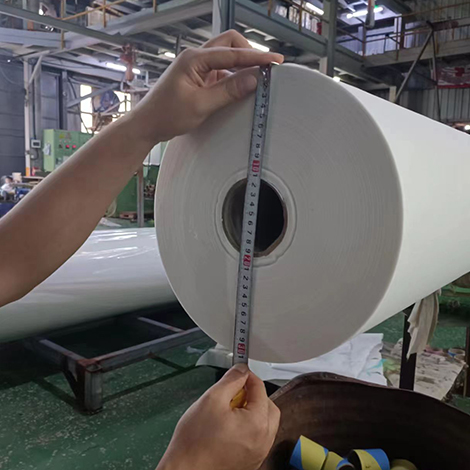
Henghua is a leading manufacturer of PP (Polypropylene) spunbond nonwoven fabric based in Fuzhou city.As one of the largest production houses in China, we operate six advanced production lines with extra two re-roller equipment.Our facilities with covers an area of 3400 square meter workshop. The gross investment arrive 100 millian YUAN.   We take pride in more than 22 years of experience in working with nonwoven fabrics.We pick only the best raw materials of Polypropylene for our products.Our customer are located all over the world.We continuously invovate our production to stay relevant.   Believe in reliable operations & consistent quality Each year, we manufacture 10,000 metric tons of quality polypropylene spunbonded non-woven fabrics from 10gram square meter to 250gram square meter and width range from 15-260cm. Our products are widely used in package industry, medical, home textile,furniture and agriculture fields, such as Shopping bags,suit bags,strorage box,face mask,pillow cover,sofa spring cover,fruit bags.. Henghua Nonwoven products are selling well in country and region such as South America, Southeast Asia, Africa, Southern Europe and South Asia. And we have been getting reputation from customers widely.  

Soclal sharing

Contact Us
Need help? +86 -591-28839008

E-mail : marketing@henghuanonwoven.com

Add : No.260 Liqi Road Hangcheng Street, Changle District, Fuzhou City, Fujian Province, China

Sign Up To Newsletter

Subscribe

Copyright @ 2026 Fuzhou Heng Hua New Material Co., Ltd. All Rights Reserved. Network Supported

Blog Sitemap Xml Privacy Policy

leave a message

leave a message
If you are interested in our products and want to know more details,please leave a message here,we will reply you as soon as we can.
submit

Home

Products

contact

Enter product details (such as color, size, materials etc.) and other specific requirements to receive an accurate quote.
leave a message
If you are interested in our products and want to know more details,please leave a message here,we will reply you as soon as we can.
Submit