Spunbond Nonwoven vs. Woven Fabric
Jun 12, 2026
From a Nonwoven Roll Manufacturer to You
If you're sourcing fabric for packaging, medical products, agriculture, or furniture, you've likely faced a choice: woven fabric or spunbond nonwoven?
Both are made from polypropylene (PP). Both are durable and recyclable. But they are fundamentally different materials — produced by different processes, with different properties, for different applications.
Let's break down the key differences so you can make the right choice for your product.
What Is Woven PP Fabric?
Woven PP fabric is made by weaving flat polypropylene tapes — similar to how traditional textiles are made. The tapes are extruded, stretched, then woven on a loom to create a fabric.
Common applications: Heavy-duty bags (rice, flour, animal feed), bulk bags (FIBC), tarpaulins, carpet backing.
What Is Spunbond Nonwoven Fabric?
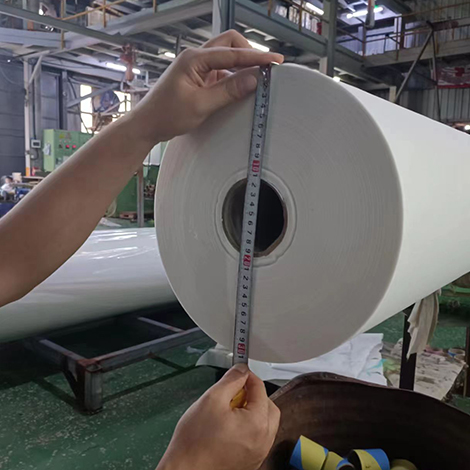
Spunbond nonwoven is made by extruding continuous polypropylene filaments, laying them randomly onto a conveyor belt, and bonding them with heat and pressure — no weaving, no yarns, no stitching.
Common applications: Medical gowns, surgical masks, diaper components, shopping bags, furniture dust covers, agricultural ground covers.
Key Differences at a Glance
PropertyWoven PP FabricSpunbond NonwovenProduction methodWeaving flat tapes on a loomExtrusion + web forming + thermal bondingFiber structureInterlaced flat tapes (visible grid)Random continuous filaments (no visible pattern)Tear strengthDirectional — tears easily along the weaveUniform — strong in all directionsEdge frayingYes — edges fray, creating dust and loose threadsNo — clean cut, lint-freeDust blockingPoor — visible gaps between tapesExcellent — fine pore structure blocks dustBreathabilityGoodExcellentPrint qualityPoor — coarse, blurry, limited colorsExcellent — sharp logos, bright colors, barcodesSurface textureRough, abrasiveSoft, smoothWeight (same strength)HeavierLighter (30–40% weight savings)CostGenerally higherGenerally lower
When to Choose Woven PP Fabric
Woven PP is still the right choice for certain applications:
Extremely heavy loads — 50kg+ industrial bags (though spunbond works up to 50kg with proper GSM)
Applications requiring extreme puncture resistance (sharp objects like metal parts)
Where high stiffness/rigidity is needed — woven stands up more stiffly than soft spunbond
Reusable bulk containers (FIBC) — the industry standard
When to Choose Spunbond Nonwoven
Spunbond is the better choice for:
Medical and hygiene products — gowns, masks, drapes, diapers, sanitary napkins
Food packaging (rice, flour, grain) — dust-free, breathable, pest-proof, excellent print
Shopping bags — lightweight, reusable, printable, low cost
Furniture components — dust covers, spring wraps, foam linings
Agricultural ground covers — weed block, frost protection
Geotextiles — separation, filtration, erosion control
Any application where softness, print quality, or dust blocking matters
Case Study: Rice & Flour Packaging
This is where the difference really shows. For a 10kg rice bag:
Woven PP bag: Rough texture, poor print, frayed edges, dust leaks through gaps.
Spunbond bag (80–100gsm): Smooth, sharp logo printing, dust stays inside, soft to handle, lighter shipping weight.
More and more premium rice and flour brands are switching to spunbond — not because it's cheaper (though it often is), but because it's simply a better bag.
Can Spunbond Replace Woven?
Not entirely. For very heavy-duty industrial applications (50kg+ cement, sharp metal parts), woven remains the standard.
But for the vast middle market — 5kg to 25kg bags, medical disposables, furniture components, agricultural covers — spunbond is increasingly the preferred choice.
Why? Because it solves problems woven fabric can't: dust leakage, poor print quality, frayed edges, rough texture, and uneven tear strength.
The Bottom Line
Both woven and spunbond have their place. The key is matching the material to the application.
If you need softness, print quality, dust blocking, breathability, or lightweight strength — spunbond nonwoven is your answer.
If you need extreme stiffness or resistance to very sharp objects — stick with woven.
Looking for a reliable supplier of PP spunbond nonwoven rolls? We manufacture single-layer spunbond from 10gsm to 150gsm, with custom widths and colors. Perfect for packaging, medical, furniture, and agricultural applications.
Contact us for samples or a quote – Let's find the right fabric for your product.
marketing@henghuanonwoven.com







 Network Supported