Blog
Home

PP

PP

  • PP spunbond nonwoven fabric export process for foreign trade Nov 12, 2026
    The entire export process of PP spunbond non-woven fabric can be divided into three core stages: early order docking, mid-term production customs declaration, and later logistics closure. The entire process is adapted to the latest customs supervision and overseas compliance requirements in 2026. The specific operating steps are as follows: 📋  Pre order and qualification preparation Confirmation of core qualifications: Enterprises need to complete the import and export operation rights filing in advance. PP spunbond non-woven fabrics are generally classified under the HS code 5603 series, subdivided by weight: ≤ 25g is classified under 5603.91, 25-70g is classified under 5603.12, and 70-150g is classified under 5603.13. Medical grade products need to prepare additional medical device related filing documents. Lock in order details: Clearly agree with the customer on core parameters such as product weight, width, and tensile strength, prioritize FOB trade terms, and use a conventional payment method of 30% T/T prepayment+70% payment upon receipt of a copy of the bill of lading. New customers should avoid full credit sales and verify whether the buyer's import qualifications are complete simultaneously. Compliance pre verification: Confirm in advance the special requirements of the destination country, the EU needs to provide a REACH compliance declaration, the US contact skin products need to comply with the OEKO-TEX Standard 100 standard, and the FOB price of 8-70g products from Colombia cannot be lower than $2.58/kg, otherwise anti-dumping differential tax will be levied. 🏭  Production stocking and document preparation Production and Quality Inspection: Production shall be completed in accordance with the contract requirements, and each batch shall be accompanied by weight and tensile test reports issued by CMA institutions. Medical grade products shall also be supplemented with microbiological testing certificates to ensure that all indicators meet the standards stipulated in the contract. Packaging specifications: The inner layer of the rolled product is wrapped with waterproof plastic film, and the outer layer is reinforced with a woven bag or pallet. The outer packaging is clearly marked with the mark, product name, weight, roll number, and net weight, and labeled with a "moisture-proof" warning sign to avoid deformation caused by moisture during long-distance sea transportation. Complete document preparation: Prepare commercial invoices, packing lists, and trade contracts in advance, and apply for General Certificate of Origin CO or Generalized System of Preferences Certificate of Origin FORM A as needed for customs clearance at the customer's destination port to enjoy tariff reductions. 🚢  Booking and export customs declaration Logistics booking: Book with the freight forwarder 7-14 days in advance. PP spunbond non-woven fabric belongs to light cargo and is charged based on volume and weight. Priority should be given to selecting top shipping companies with stable routes. Additional war risk insurance should be purchased for Middle East and Red Sea routes, and a 7-12 day delay buffer time should be reserved. Domestic customs declaration: Submit electronic declaration through the China International Trade Single Window, truthfully declare the product material, weight, width, and purpose, cooperate with customs to complete inspection, prepare product samples and ingredient descriptions in advance, and avoid delays caused by classification doubts. Shipment release: After customs clearance, arrange for shipment and promptly send the complete set of documents including bill of lading, invoice, packing list, and certificate of origin to the customer for customs clearance at the destination port. 💰  Closing Foreign Exchange and Tax Refunds Foreign exchange receipts and payments: Follow up on the final payment after the goods are shipped, and conduct credit screening in advance for customers in conflict areas to avoid risks such as difficulties in letter of credit redemption and delayed payment. Export tax refund: After receiving the complete set of documents, submit the tax refund application to the electronic tax bureau. The regular tax refund rate for PP spunbond non-woven fabric is 13%, and keep production records and logistics documents for future reference as required.     Contact us for samples or a quote:You can contact us anytime, and we look forward to working with you. marketing@henghuanonwoven.com
  • Why is the demand for PP spunbond nonwoven fabrics increasing in the Middle East region? Nov 12, 2026
    The overall foreign trade market of PP spunbond nonwoven fabric in November December 2026 shows a high-level game and a slight decline in December, without unilateral surge or collapse. The core supply and demand, prices, and regional characteristics are as follows: 📊  Overall market rhythm November: In the high volatility game stage, the international crude oil geopolitical premium is still supporting the cost side, coupled with the concentrated release of emergency orders in the Middle East, the conventional civilian SS FOB quotation remains at $1500-1650/ton, and the export volume has slightly increased compared to October. December: Domestic PP production capacity increased sharply, coupled with overseas terminals entering the traditional procurement off-season. There is a clear window for price decline, and the regular FOB quotation narrowed to 1450-1580 US dollars/ton, still in the high range of the year as a whole. 💰  Core driving factors 1. Upward support On the cost side, EIA has raised the average price of Brent crude oil for the fourth quarter of 2026 to about $105 per barrel. The risk of passage through the Strait of Hormuz caused by geopolitical conflicts continues to increase the premium of raw materials. The spot price of PP fiber materials in China remains at 10000-12000 yuan/ton, directly supporting the price center of non-woven fabrics. On the demand side, emergency orders in the Middle East region have surged by more than 30% month on month, mainly flowing to China's production capacity. Coupled with high energy costs in Europe, the export share of cost-effective PP spunbond nonwoven fabrics in China continues to increase, and the overall export volume in the fourth quarter increased by 10% -15% compared to the third quarter. 2. Downward suppression Supply side: Large scale PP new facilities such as Huajin Amei and Zhongsha Gulei have been gradually put into operation in the fourth quarter, and the expectation of loose supply for polypropylene continues to increase, with cost support gradually loosening. Policy side: The EU has cancelled the tariff exemption for small packages below 150 euros, imposed a 3 euro tariff on each cross-border small item, and imposed a temporary anti-dumping duty of up to 50% on PET spunbond non-woven fabrics, indirectly reducing the activity of some orders for European textile auxiliary materials non-woven fabrics. 🌍  Differences in market conditions across different regions The Middle East market: The market is the hottest, with the highest premium for emergency orders. The regular FOB price is 5% -8% higher than the base price, and the delivery time is generally required to be compressed to within 7 days. It is currently the most core incremental market. European market: The compliance threshold has been significantly raised, and compliant products with complete CE and recyclable testing reports are priced 3% -5% higher than ordinary models. The customs clearance costs for small and medium-sized orders have sharply increased, and the overall order structure is concentrated towards top compliant large factories. Southeast Asian offshore market: The price competition is the most intense, with regular FOB quotes close to the cost line of $1450/ton, and the profit margin is the thinnest, mainly based on short-term orders for essential needs. 📌  Suggestions for foreign trade operations Quotation strategy: Lock in the current high orders in November and reserve a replenishment window after the price correction in December. It is not recommended to blindly hoard a large amount of raw materials to bet on unilateral price increases. Compliance precautions: Sort out complete certificates of origin and environmental testing documents for European exports in advance to avoid additional costs and customs clearance delays caused by EU customs inspections. Order structure: Priority is given to undertaking high premium emergency orders from the Middle East, combined with short orders for Southeast Asian demand, balancing overall profits and delivery pressure.     Contact us for samples or a quote:You can contact us anytime, and we look forward to working with you. marketing@henghuanonwoven.com
  • PP spunbond nonwoven fabric foreign trade market from November to December 2026 Nov 05, 2026
    The overall foreign trade market of PP spunbond nonwoven fabric in November December 2026 shows a high-level game and a slight decline in December, without unilateral surge or collapse. The core supply and demand, prices, and regional characteristics are as follows: 📊  Overall market rhythm 1. November: In the high volatility game stage, the international crude oil geopolitical premium is still supporting the cost side, coupled with the concentrated release of emergency orders in the Middle East, the conventional civilian SS FOB quotation remains at $1500-1650/ton, and the export volume has slightly increased compared to October. 2. December: Domestic PP production capacity increased sharply, coupled with overseas terminals entering the traditional procurement off-season. There is a clear window for price decline, and the regular FOB quotation narrowed to 1450-1580 US dollars/ton, still in the high range of the year as a whole. 💰  Core driving factors 1. Upward support On the cost side, EIA has raised the average price of Brent crude oil for the fourth quarter of 2026 to about $105 per barrel. The risk of passage through the Strait of Hormuz caused by geopolitical conflicts continues to increase the premium of raw materials. The spot price of PP fiber materials in China remains at 10000-12000 yuan/ton, directly supporting the price center of non-woven fabrics. On the demand side, emergency orders in the Middle East region have surged by more than 30% month on month, mainly flowing to China's production capacity. Coupled with high energy costs in Europe, the export share of cost-effective PP spunbond nonwoven fabrics in China continues to increase, and the overall export volume in the fourth quarter increased by 10% -15% compared to the third quarter. 2. Downward suppression Supply side: Large scale PP new facilities such as Huajin Amei and Zhongsha Gulei have been gradually put into operation in the fourth quarter, and the expectation of loose supply for polypropylene continues to increase, with cost support gradually loosening. Policy side: The EU has cancelled the tariff exemption for small packages below 150 euros, imposed a 3 euro tariff on each cross-border small item, and imposed a temporary anti-dumping duty of up to 50% on PET spunbond non-woven fabrics, indirectly reducing the activity of some orders for European textile auxiliary materials non-woven fabrics. 🌍  Differences in market conditions across different regions The Middle East market: The market is the hottest, with the highest premium for emergency orders. The regular FOB price is 5% -8% higher than the base price, and the delivery time is generally required to be compressed to within 7 days. It is currently the most core incremental market. European market: The compliance threshold has been significantly raised, and compliant products with complete CE and recyclable testing reports are priced 3% -5% higher than ordinary models. The customs clearance costs for small and medium-sized orders have sharply increased, and the overall order structure is concentrated towards top compliant large factories. Southeast Asian offshore market: The price competition is the most intense, with regular FOB quotes close to the cost line of $1450/ton, and the profit margin is the thinnest, mainly based on short-term orders for essential needs. 📌  Suggestions for foreign trade operations Quotation strategy: Lock in the current high orders in November and reserve a replenishment window after the price correction in December. It is not recommended to blindly hoard a large amount of raw materials to bet on unilateral price increases. Compliance precautions: Sort out complete certificates of origin and environmental testing documents for European exports in advance to avoid additional costs and customs clearance delays caused by EU customs inspections. Order structure: Priority is given to undertaking high premium emergency orders from the Middle East, combined with short orders for Southeast Asian demand, balancing overall profits and delivery pressure. Note: If the geopolitical conflict in the Middle East escalates beyond expectations in the future, the jump in oil prices will directly drive up the quotation, and it is necessary to adjust the quotation strategy in real-time according to the dynamics of crude oil.     Contact us for samples or a quote:You can contact us anytime, and we look forward to working with you. marketing@henghuanonwoven.com
  • How to test the tensile strength of PP spunbond nonwoven fabric? Nov 05, 2026
    The tensile testing of PP spunbond nonwoven fabric must strictly follow the GB/T 24218.3-2010 strip method to obtain accurate and traceable results. The complete testing process and quality judgment method are as follows: 📋 Preparation before tensile testing of PP spunbond nonwoven fabric 1. Core equipment: The CRE electronic tensile machine with level 1 accuracy is selected, and the accuracy of the force sensor is better than ± 0.5% FS, with a range covering 10N~5kN, which is suitable for the testing needs of most conventional PP spunbond nonwoven fabrics. 2. Standard environment: put the sample in an environment of 20 ℃± 2 ℃ and 65% ± 4% relative humidity in advance to adjust the humidity balance for ≥ 24h to avoid 10%~20% error of test data caused by temperature and humidity deviation. 3. Sampling rules: Take samples along the longitudinal direction (MD, machine running direction) and transverse direction (CD, width direction) of the non-woven fabric, with the sampling position at least 1m away from the edge of the fabric, avoiding creases, holes, and oil stains. Cut at least 5 standard samples in each direction. 4. Sample specifications: Each sample size is 50mm wide by 200mm long. When cutting, ensure that there are no burrs or gaps on the edges to avoid stress concentration that may cause premature fracture of the sample. 🛠️  Standard Test Procedure for Tensile Strength of PP Spunbond Non woven Fabric 1. Preheat the tensile machine for 15-30 minutes, reset the force value and displacement data, set the clamping distance to 200mm, the stretching speed to 100mm/min ± 10mm/min, and apply an initial tension of 2N to the sample. 2. Use a fixture with rubber pads to clamp the two ends of the sample, ensuring that the sample does not slip or get pinched during the testing process. Start the equipment and stretch it at a constant speed until the sample is completely broken. 3. The equipment automatically records the maximum force value and fracture displacement during the stretching process. After each group of 5 samples is tested, the average longitudinal and transverse fracture strength and elongation at break are automatically calculated, and invalid data with obvious abnormalities are eliminated. ✅  Standard for determining the tensile strength of PP spunbond nonwoven fabric 1. Core indicators: Conventional 40g/㎡ civilian PP spunbond nonwoven fabric, with a qualified line of longitudinal breaking strength ≥ 85N/5cm, transverse breaking strength ≥ 72N/5cm, and elongation at break ≥ 25%; The 25g/㎡ mask special model has a vertical ≥ 85N/5cm and horizontal ≥ 72N/5cm, meeting the high-speed production requirements of automated mask machines. 2‌. Differentiation of advantages and disadvantages: The longitudinal and transverse tension difference of high-quality products is controlled within 25%, and the force is evenly distributed during the stretching process. The fracture edge is neat without a large amount of fiber scattering; Poor quality products have a lateral tensile force that is less than 60% of the standard value, and they break easily when torn. The fibers at the fracture point are heavily detached, which completely fails to meet the stress requirements of the usage scenario. 3. Special scenario supplement: High end products such as geotextiles and medical SMS composite fabrics require additional wet tensile testing (soaking in water at 20 ℃ for 1 hour and then draining the test). A wet strength retention rate of ≥ 90% is considered qualified, suitable for special scenarios such as water conservancy engineering and disinfection and sterilization.   Contact us for samples or a quote:You can contact us anytime, and we look forward to working with you. marketing@henghuanonwoven.com
  • How to distinguish the quality of PP spunbond non-woven fabric? Oct 23, 2026
    The identification of the quality of PP spunbond non-woven fabric can be achieved through a three-layer method of "rapid hand eye screening+core indicator verification+professional testing", covering the entire process from visual recognition to compliance judgment, with low operational threshold and high accuracy: 1、 5-minute rapid hand eye screening Appearance uniformity: High quality products have uniform fiber distribution on the surface, without obvious cloud spots, holes, impurities or black spots, and there is no visible thickness difference from the edge to the middle of the entire width; Products produced from inferior recycled materials may have issues with local light transmission and fiber clumping. Touch texture to distinguish purity: The products produced from brand new pure materials have a fluffy and soft feel, without obvious plastic pungent odor; Poor quality products filled with a large amount of calcium carbonate have a hard and brittle texture. When rubbed, white powder will fall off, and a noticeable plastic odor can be smelled when approached. Simple tensile test: Tear along the longitudinal and transverse directions with bare hands. When tearing high-quality products, the resistance is uniform, and the broken edges are neat without a large amount of fiber shedding; Poor quality products break easily when torn, with a large amount of fibers flying off at the fracture site, and the tensile strength is much lower than the standard value for the same weight. 2、 Verification of core performance indicators Uniformity of weight: It is not enough to only sample and weigh at a single point. Samples should be taken at the edges, middle, and seams of the entire width, as well as at the head, middle, and tail sections of the coil. The weight deviation of high-quality products should be controlled within ± 3%, while the weight deviation of low-quality products at a single point can exceed 10%, which directly affects the overall tensile performance. Bidirectional Strength Compliance: Tested according to GB/T 24218.3 standard, the standard 40g/m ² product has a longitudinal fracture strength of ≥ 85N/5cm and a transverse strength of ≥ 72N/5cm, with a longitudinal and transverse tension difference controlled within 25% to be qualified; Poor quality products have a lateral tensile force that is less than 60% of the standard value, and they break when pulled. Breathability and thermal stability: Observing the pore distribution uniformly in front of a light source, there is no obvious local blockage in terms of breathability; Placed at 120 ℃ for 10 minutes, with a thermal shrinkage rate of ≤ 3.5% and no significant deformation shrinkage, suitable for high temperature scenarios such as medical sterilization. 3、 Final determination of compliance Medical and food contact products must have complete ISO and CE national standard testing reports verified to confirm that environmental indicators such as ethylene oxide residue and heavy metal precipitation fully comply with the mandatory standards for the corresponding scenarios. High demand orders require advance agreement on sampling point rules, weight tolerance range, and judgment caliber to avoid misjudging the overall quality of the roll through single point sampling. Wide width splicing products must be separately verified for weight and tension performance at the joints, which is the most easily overlooked quality weakness.     Contact us for samples or a quote:You can contact us anytime, and we look forward to working with you. marketing@henghuanonwoven.com
  • What material is PP spunbond non-woven fabric? Oct 16, 2026
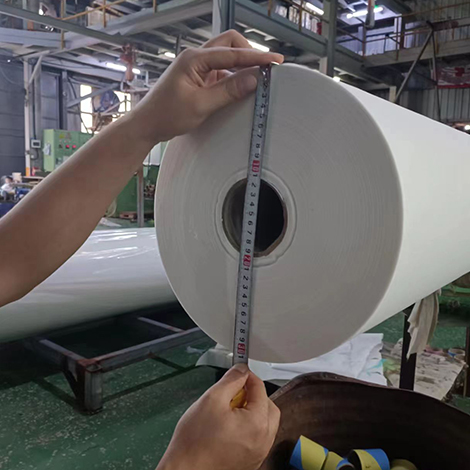
    PP spunbond non-woven fabric is a non-woven fabric material made from polypropylene (PP) as the core raw material through the spunbond process. It belongs to the most widely used and high-yield mainstream variety in the non-woven fabric category. 1. Core Raw Material Attributes Its basic raw material is polypropylene, which is a thermoplastic synthetic resin polymerized from propylene monomers. The high-purity homopolymer PP has an impurity content of less than 0.1%, is non-toxic, odorless, and has no harmful precipitation. It can directly contact human skin and is suitable for close fitting scenarios such as medical care, mother and baby care. 2. Unique production process Completely skipping the spinning and weaving steps of traditional textiles, PP slices are directly heated and melted, extruded into continuous filaments through a spinning plate, and uniformly laid into a fiber web after high-speed airflow stretching and cooling. Finally, it is reinforced and formed through hot rolling and bonding, with production efficiency far higher than traditional woven fabrics, and no printing and dyeing wastewater discharge throughout the process. 3. Core Basic Characteristics Lightweight and low density, easy to transport and process, high porosity and excellent breathability; Resistant to acid and alkali corrosion, resistant to microbial growth, and not easily moldy under normal conditions; Melting point of 164-170 ℃, can be disinfected and sterilized in environments above 100 ℃, and does not deform at 150 ℃ without external force; The difference in longitudinal and transverse tensile forces is controllable, and by optimizing the mesh laying process, the bi-directional strength difference can be reduced to within 15%, making it suitable for automated high-speed production scenarios. 4. Mainstream application scenarios Widely used in medical masks, surgical gowns, baby diapers, shopping bags, agricultural geotextiles, home textile lining fabrics, and other fields. After modification treatments such as antibacterial and UV resistance, it can also be extended to high-end scenarios such as outdoor engineering and special protection.     Contact us for samples or a quote:You can contact us anytime, and we look forward to working with you. marketing@henghuanonwoven.com  
  • What is the environmental performance of PP spunbond nonwoven fabric? Sep 18, 2026
    The environmental performance of PP spunbond nonwoven fabric is generally above average in the industry, with the advantages of low pollution and recyclability. At the same time, there are inherent limitations of traditional PP materials that cannot be completely biodegraded. This can be fully explained from two aspects: core advantages and objective limitations 1、 Core environmental advantages Low energy consumption and low emissions in the production process: The spunbond process directly forms a web through melt spinning, omitting multiple high pollution processes such as spinning and weaving in traditional textiles, resulting in high production efficiency and no discharge of printing and dyeing wastewater throughout the entire process. The environmental attributes of the production process are far superior to traditional woven fabrics. Pure and non-toxic material: The qualified product is made of high-purity homopolymer PP as raw material, with an impurity content of less than 0.1%, no harmful chemical precipitation, and can directly contact the skin. It is suitable for close use scenarios such as medical, maternal and child care. Low smoke combustion without secondary pollution: The smoke density grade of high-purity grades can be as low as 30 or below (ordinary PP is about 80), and there is no toxic or harmful smoke generated during the combustion process. There are no solid harmful residues, which comply with the EU EN 13501-1 fire and environmental protection standards. Recyclable: The material has stable chemical properties and can be 100% recycled and processed through melting and granulation. The recycling rate is much higher than that of composite non-woven materials, which can significantly reduce the environmental burden after disposal. 2、 Objective environmental limitations Ordinary traditional PP spunbond non-woven fabric cannot achieve complete biodegradation, and complete decomposition in natural environments takes decades or even hundreds of years. During the decomposition process, microplastic residues may be generated, which cannot meet the strict requirements for complete degradation of industrial compost. Some ordinary PP non-woven fabrics on the market that claim to be "biodegradable" only add a small amount of starch and calcium carbonate fillers, which cannot achieve true complete degradation and instead accelerate plastic fragmentation, causing more hidden microplastic pollution. When purchasing, attention should be paid to identification. Contact us for samples or a quote marketing@henghuanonwoven.com

Henghua is a leading manufacturer of PP (Polypropylene) spunbond nonwoven fabric based in Fuzhou city.As one of the largest production houses in China, we operate six advanced production lines with extra two re-roller equipment.Our facilities with covers an area of 3400 square meter workshop. The gross investment arrive 100 millian YUAN.   We take pride in more than 22 years of experience in working with nonwoven fabrics.We pick only the best raw materials of Polypropylene for our products.Our customer are located all over the world.We continuously invovate our production to stay relevant.   Believe in reliable operations & consistent quality Each year, we manufacture 10,000 metric tons of quality polypropylene spunbonded non-woven fabrics from 10gram square meter to 250gram square meter and width range from 15-260cm. Our products are widely used in package industry, medical, home textile,furniture and agriculture fields, such as Shopping bags,suit bags,strorage box,face mask,pillow cover,sofa spring cover,fruit bags.. Henghua Nonwoven products are selling well in country and region such as South America, Southeast Asia, Africa, Southern Europe and South Asia. And we have been getting reputation from customers widely.  

Soclal sharing

Contact Us
Need help? +86 -591-28839008

E-mail : marketing@henghuanonwoven.com

Add : No.260 Liqi Road Hangcheng Street, Changle District, Fuzhou City, Fujian Province, China

Sign Up To Newsletter

Subscribe

Copyright @ 2026 Fuzhou Heng Hua New Material Co., Ltd. All Rights Reserved. Network Supported

Blog Sitemap Xml Privacy Policy

leave a message

leave a message
If you are interested in our products and want to know more details,please leave a message here,we will reply you as soon as we can.
submit

Home

Products

contact

Enter product details (such as color, size, materials etc.) and other specific requirements to receive an accurate quote.
leave a message
If you are interested in our products and want to know more details,please leave a message here,we will reply you as soon as we can.
Submit