Blog
Home

spunbond nonwoven

spunbond nonwoven

  • The application of polypropylene spunbond non-woven fabric in furniture base cloth (Dust Cover) May 22, 2026
    From a Nonwoven Roll Manufacturer to the Furniture Industry Flip over any quality sofa, armchair, or mattress. What do you see on the bottom? In most cases, you will find a dust cover (also called bottom lining or cambric replacement). This fabric is stapled to the underside of the furniture frame. It hides the internal structure, keeps dust out, and gives the piece a finished look. Traditionally, dust covers were made from woven cambric (a heavy black cotton or poly-cotton fabric). Today, more and more furniture manufacturers are switching to polypropylene spunbond nonwoven fabric. Why the shift? Let's break it down. What Is a Furniture Dust Cover? A dust cover is the fabric layer attached to the bottom of upholstered furniture — sofas, loveseats, chairs, ottomans, and even mattresses. Its jobs are simple but important: Keep dust and debris out – Prevents dust mites, pet hair, and dirt from entering the furniture interior Provide a clean finish – Hides springs, webbing, and raw frame edges Allow breathability – Prevents moisture buildup and mold inside the furniture Offer light protection – Guards against minor impacts and pests Why Spunbond Nonwoven for Dust Covers? Here are the key reasons furniture manufacturers are switching from woven cambric to spunbond nonwoven: 1. Superior Dust BlockingSpunbond nonwoven is made from continuous filaments bonded together. The structure has fine, tortuous pathways that block dust particles effectively — better than woven cambric, which has visible gaps between yarns. 2. Excellent BreathabilityWhile blocking dust, spunbond still allows air and moisture vapor to pass through. This prevents condensation inside the furniture frame — a common cause of mold, mildew, and musty odors in older furniture. 3. Tear-ResistantWoven cambric can tear easily, especially along staple lines or when stretched. Spunbond nonwoven offers uniform tear strength in all directions. It won't rip during installation or transport. 4. No FrayingWoven fabrics fray at the cut edges — loose threads that look messy and can catch on warehouse equipment. Spunbond cuts clean and smooth, with zero fraying. This gives a more professional finished product. 5. Lighter Weight = Lower Shipping CostSpunbond nonwoven is significantly lighter than woven cambric at the same coverage area. When you're shipping thousands of finished sofas, every gram matters. Lighter furniture means lower freight costs. 6. Cost-EffectivePP spunbond is generally less expensive than woven cambric, especially at higher volumes. Manufacturers get better performance at a lower price point. 7. Easy to StapleSpunbond fabric is flexible yet strong. Factory workers can stretch it over the frame and staple through it without tearing. This speeds up assembly and reduces waste. Recommended Specifications for Dust Covers Property Recommended Value Notes Basis weight 80–120 gsm 90–100 gsm is most common Color Black Black hides dirt and looks professional Width Customizable Match your frame dimensions Material 100% virgin polypropylene Consistent quality, no recycled content risk Treatment Antioxidant / UV stabilizer For long-term durability (optional) Spunbond vs. Woven Cambric for Dust Covers Feature Woven Cambric Spunbond Nonwoven Dust blocking Moderate (gaps between yarns) Excellent (continuous filament structure) Breathability Good Excellent Tear resistance Directional (tears easily along weave) Uniform (strong in all directions) Edge fraying Yes (frays over time) No (clean cut) Weight (per square meter) Heavier (typically 120–150 gsm) Lighter (80–120 gsm) Cost Higher Lower Installation speed Slower (handles fraying, tear-prone) Faster (easy to stretch and staple) Who Uses Spunbond Dust Covers? Sofa and sectional manufacturers – Residential and commercial Armchair and recliner producers – Motion furniture needs durable bottom linings Ottoman and footstool makers – Small pieces still need dust protection Mattress manufacturers – Bottom dust covers for innerspring and foam mattresses Office chair manufacturers – Under-seat dust covers for upholstered task chairs Quality Check: What to Look for in a Dust Cover Fabric Not all spunbond is the same. For dust cover applications, look for: Consistent basis weight – Avoid thin spots that tear easily Deep black color – Fading looks cheap; quality spunbond holds its color Smooth surface – No roughness that could snag during installation Antioxidant additives – Prevents yellowing and degradation over years of use The Bottom Line Your customer will never see the dust cover. But they will experience the results: a clean, fresh-smelling sofa that holds up over time. And you – the manufacturer – will notice the lower material costs, faster assembly, and fewer quality complaints. Switching from woven cambric to polypropylene spunbond nonwoven for dust covers is a simple change with real returns. Looking for a reliable supply of spunbond nonwoven for furniture dust covers? We offer custom widths, deep black color, and basis weights from 80gsm to 120gsm — exactly what furniture factories need. Contact us for samples or a quote – Let your furniture stay clean, from the bottom up.
  • Spunbond Nonwoven Fabric in Flour & Rice Packaging Application Apr 29, 2026
    From a Nonwoven Roll Manufacturer to the Grain Industry Walk into any bulk grain warehouse or supermarket rice aisle. What do you see?Mostly woven polypropylene bags. They’re strong, sure. But they have serious problems: frayed edges, rough texture, poor printing quality, and dust leakage. Now look at the premium segment. More and more rice mills and flour brands are switching to polypropylene spunbond nonwoven fabric. Why? Because it solves almost every pain point of traditional woven sacks. Here is why your next batch of rice or flour should go into a spunbond nonwoven bag.   1. No Dust Leakage (This is Huge for Flour) Woven PP bags are made of interlaced flat tapes. There are always tiny gaps. For rice, that might be fine. For flour? Fine dust escapes constantly—wasting product, dirtying trucks, and annoying warehouse staff. Spunbond nonwoven is made from continuous filaments bonded together. It has no weave gaps. Dust stays inside. Period. For flour mills, this alone is worth the switch.   2. Breathable but Blocks Pests Grains and flour need airflow to prevent mold and heat buildup. Spunbond nonwoven is naturally breathable—air circulates, moisture escapes. But the fabric's fine pore structure is still small enough to block insects and weevils. Traditional woven bags often let small pests in through the weave gaps. Spunbond doesn't.   3. Much Better Print Quality Woven PP bags print poorly—coarse, blurry, limited colors. Your brand deserves better.Spunbond nonwoven has a smooth, paper-like surface. It accepts high-quality flexo or gravure printing with sharp logos, bright colors, and even barcodes. Your bag becomes a real marketing tool, not just a container.   4. Softer on Hands & Equipment Woven edges are sharp. Workers loading trucks get cut fingers. Filling machines suffer from abrasive wear.Spunbond nonwoven is soft, smooth, and lint-free. It’s gentler on both human hands and automated filling lines.   5. Lightweight = Lower Shipping Cost A spunbond bag of the same strength weighs significantly less than a woven bag. When you're shipping 10,000 empty bags, the weight savings translate directly into lower freight costs. For high-volume grain exporters, this adds up fast.   6. Fully Recyclable Like woven PP, spunbond is 100% polypropylene. It can be recycled in existing PP streams. But unlike woven bags, there's no need to separate tapes or remove laminations. This makes end-of-life recycling simpler for mills with closed-loop programs.   7. Recommended Basis Weight: 80gsm and Above Not all spunbond is created equal. For grain and flour packaging, we strongly recommend using 80gsm or higher. Below 80gsm (e.g., 50–70gsm): Suitable for lightweight produce or bread bags, but may risk tearing under the weight and sharp corners of rice grains or flour settling during transport. 80gsm – 100gsm: The sweet spot for 5kg to 25kg bags. Excellent strength-to-weight ratio, durable enough for automated filling lines, yet still cost-effective. 100gsm – 120gsm: Recommended for 25kg to 50kg industrial-size bags or rough handling conditions (e.g., animal feed, long-distance export shipments). Using 80gsm+ spunbond ensures the bag withstands stacking, vibration, and accidental drops without seam failure or fabric rupture.     Who's Using Spunbond Grain Bags Already? Premium rice brands in Southeast Asia (5kg, 10kg sizes) – typically using 80–90gsm Organic flour mills in Europe (avoiding bleach in white woven bags) – using 90–100gsm Animal feed producers needing breathable, pest-proof small sacks – using 100–120gsm   What About Strength? Some buyers worry: "Is nonwoven strong enough for a 25kg rice bag?" Yes—with the right basis weight. Our spunbond rolls are available from 40gsm to 150gsm. For reliable grain and flour packaging, we consistently advise customers to start at 80gsm and above. Combined with reinforced bottom stitching (or ultrasonic welding), an 80gsm+ spunbond bag handles daily loading, stacking, and transport without issues.   The Bottom Line for Grain Processors Feature Woven PP Bag Spunbond Nonwoven Bag (80gsm+) Dust leakage Yes No Pest protection Moderate Excellent Print quality Poor Excellent Worker safety Sharp edges Soft Weight (empty) Heavy Light Recommended strength – 80gsm minimum Recycling Moderate Easy If you are a rice mill, flour producer, or packaging converter, spunbond nonwoven is not a niche product—it's a serious upgrade over traditional weaving. And with 80gsm or higher, you get proven durability without the drawbacks of woven sacks. We supply PP spunbond fabric in large rolls, available from 80gsm to 150gsm for grain packaging applications. White, natural, or custom colors. UV-stabilized options available for outdoor feed storage. Ready to test a sample roll at 80gsm or 100gsm? Contact us. Let's pack grain better. Marketing@henghuanonwoven.com    
  • How Choosing Recyclable PP Spunbond Nonwoven Can Elevate Your Brand & Our Planet Jan 30, 2026
    Introduction:Today’s consumers and businesses are more conscious than ever about the environmental responsibility behind the products they use and make. Simply offering high-quality goods is no longer enough—brands are expected to actively demonstrate their commitment to a sustainable future through their supply chain choices. If you're looking for a way to meet your product’s performance needs while meaningfully strengthening your brand’s environmental story, the core material you choose is key. Let’s explore how Polypropylene (PP) Spunbond Nonwoven can become a powerful engine for achieving your sustainability goals.   The Sustainability Imperative and Material ChoiceManufacturing is undergoing a green revolution. From reducing carbon footprints to embracing circular economy principles, businesses face growing pressure from the market, regulations, and consumer expectations. In this landscape, a material’s recyclability and life cycle impact have become critical decision-making factors.   Why PP Spunbond Nonwoven is the Future-Focused, Eco-Friendly Choice? 100% Recyclable with Closed-Loop PotentialPolypropylene is a thermoplastic, which means PP Spunbond Nonwoven can be fully recycled, melted, and remade into new fibers or products. This paves the way for a "cradle-to-cradle" circular model, significantly reducing reliance on virgin fossil resources and landfill waste. Lighter Weight, Lower Carbon EmissionsIts excellent strength-to-weight ratio means you can achieve equal or better performance with less material. This translates directly into lower fuel consumption and reduced greenhouse gas emissions during logistics and transportation, contributing to your product's overall life cycle carbon reduction. Energy-Efficient Manufacturing ProcessThe spunbond process itself integrates spinning, web-forming, and bonding into one streamlined step. Compared to traditional weaving or some other nonwoven processes, it is typically more compact and energy-efficient. Enables Waste UpcyclingOur factory is actively developing high-quality Recycled PP Spunbond Nonwoven using post-consumer recycled (PCR) or post-industrial recycled (PIR) polypropylene. Choosing these products means you are directly participating in the upcycling of plastic waste, providing a market-driven solution to plastic pollution. Durability that Reduces WasteSuperior durability and aging resistance allow for multiple or extended use in applications like agricultural covers or geotextiles, avoiding frequent replacement and reducing consumption at the source.   Transforming Environmental Benefits into Your Brand ValueChoosing sustainable PP Spunbond is more than just a supply chain optimization—it's a powerful brand asset. You can communicate to the market: Transparency & Responsibility: Showcasing your attention to product composition and origin. Innovative Leadership: Demonstrating your commitment to adopting advanced, eco-friendly materials. Shared Values with Customers: Attracting and retaining consumers and business partners who prioritize sustainability.   Our Commitment: Your Partner in SustainabilityAs a modern factory specializing in PP Spunbond Nonwoven, we understand that sustainability is a shared responsibility. We are committed to: Offering products containing recycled materials that comply with internationally recognized standards (e.g., ISO9001). Continuously optimizing production processes to reduce energy consumption. Working closely with clients to develop fabric solutions that meet specific environmental and performance requirements.   ConclusionYou no longer have to choose between performance and planet. PP Spunbond Nonwoven offers a practical path to achieving both. It allows you to seamlessly integrate care for our environment into your product design, helping you stand out in a competitive marketplace. Ready to power your product line with green innovation?Contact us today to learn more about the specifications and certifications of our standard and Eco-Series (with recycled content) PP Spunbond Nonwoven, and to request samples. Let's work together to create not only excellent products but also a positive environmental impact. marketing@henghuanonwoven.com    
  • Spunbond Nonwoven: The Engine Behind Modern Materials
    Spunbond Nonwoven: The Engine Behind Modern Materials Dec 25, 2025
     Spunbond Nonwoven: The Engine Behind Modern Materials   At Henghua Nonwoven, we are at the heart of innovation, crafting the essential fabrics that shape everyday life. As a leading spunbond nonwoven manufacturer, we don’t just produce materials; we engineer solutions. Today, we’re diving into the world of spunbond nonwoven fabric – a versatile, durable, and indispensable material that is often unseen but always felt.    What Exactly is Spunbond Nonwoven?   Unlike traditional woven or knitted textiles made from yarn, nonwoven fabrics are made directly from fibers bonded together. The spunbond process is a specific, continuous method where we extrude molten polymer (like polypropylene, polyester, or biopolymers) through fine spinnerets to form continuous filaments. These filaments are then laid down randomly onto a moving conveyor belt and bonded together – typically using thermal, mechanical, or chemical methods – to create a strong, uniform fabric.   The result? A material with a unique set of properties: high strength-to-weight ratio, excellent breathability, liquid repellency, and consistent quality. It’s cost-effective, customizable, and incredibly reliable.    The Spunbond Process: Our Precision Engineering   As a dedicated manufacturer, our expertise lies in mastering this continuous process. It can be broken down into four key stages:   1.  Extrusion: Polymer granules are melted and forced through spinnerets, creating a curtain of continuous filaments. 2.  Drawing & Attenuation: High-speed air streams stretch and thin the filaments, aligning their molecules for enhanced strength. 3.  Web Formation: The drawn filaments are randomly dispersed onto a moving belt, forming a uniform web. 4.  Bonding: The web is consolidated, most commonly through thermal bonding (calendaring with heated rollers), which creates a smooth, strong fabric.   This controlled process allows us to tailor every aspect of the fabric to your needs: weight (gsm), width, color, strength, softness, and permeability.    Where is Spunbond Nonwoven Used? (Our Solutions in Action)   The applications are vast and growing, a testament to the material’s adaptability. At Henghua Nonwoven, we provide high-quality spunbond for critical sectors:      Hygiene & Healthcare: The backbone of disposable hygiene products. Our fabrics are trusted for diapers, feminine care products, adult incontinence products, and medical gowns/drapes due to their softness, strength, and fluid management.    Agriculture: We empower modern farming with crop covers, weed control fabrics, and seedling bags that protect plants, promote growth, and conserve water.    Geotextiles & Construction: Providing strength and stability, our fabrics are used for soil stabilization, erosion control, drainage systems, and roofing membranes.    Filtration: From HVAC filters to liquid filtration, our consistent pore structure and durability make for efficient and long-lasting filter media.    Packaging & Furniture: Lightweight yet tough, spunbond is ideal for shopping bags, protective covers, and furniture backing.    Why Partner with Henghua Nonwoven?   Choosing the right manufacturer is crucial. Here’s what sets us apart:      Vertical Integration & Quality Control: We control the process from polymer to finished roll, ensuring unmatched consistency and quality at every step.    Innovation & Customization: Our R&D team works closely with clients to develop custom fabrics for specific challenges. Need a unique color, additive (like fire retardants or UV stabilizers), or special finish? We can create it.    Commitment to Sustainability: We are actively developing solutions using recycled polymers and bio-based materials, and our efficient production process minimizes waste. We provide materials that help our clients meet their environmental goals.    Global Reach, Local Expertise: With a robust production capacity and a reliable supply chain, we serve clients worldwide, offering timely delivery and expert technical support.    Driven by Your Needs: We are more than a supplier; we are a partner. We invest in understanding your application to deliver the optimal material that enhances your product’s performance and value.    The Future is Woven with Innovation   The demand for smarter, more sustainable, and higher-performance materials is accelerating. At Henghua Nonwoven, we are committed to leading this change. We are continuously refining our processes, exploring new raw materials, and developing next-generation spunbond fabrics that are stronger, softer, and greener.   Are you looking for a reliable, innovative partner for your spunbond nonwoven needs? Explore the possibilities with Henghua Nonwoven. Let's discuss how our engineered fabrics can become the foundation for your next successful product.
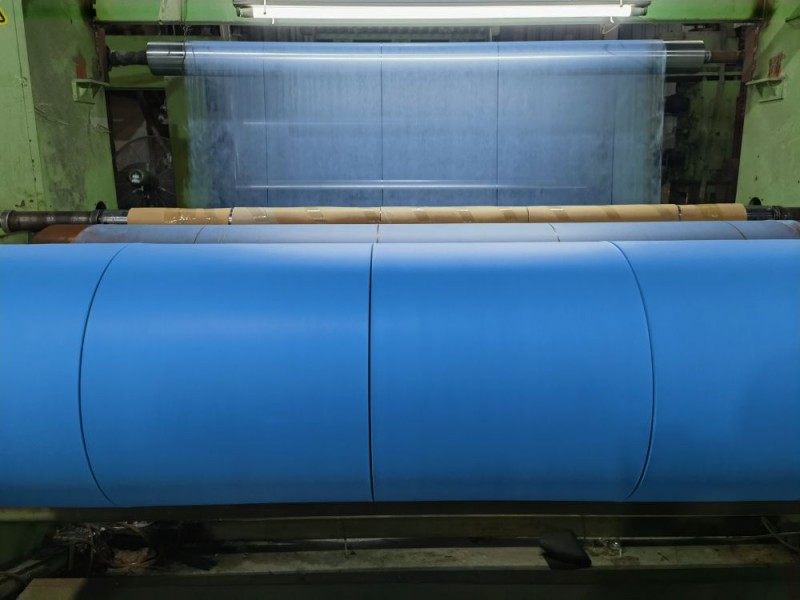
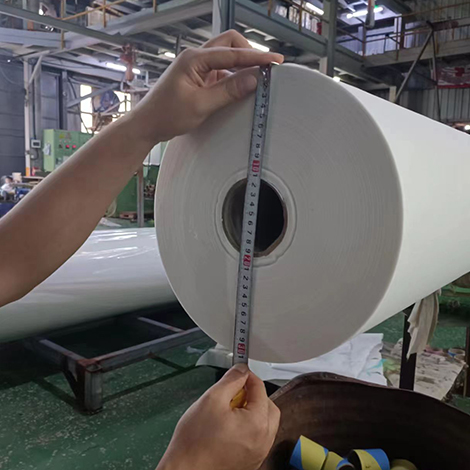
Henghua is a leading manufacturer of PP (Polypropylene) spunbond nonwoven fabric based in Fuzhou city.As one of the largest production houses in China, we operate six advanced production lines with extra two re-roller equipment.Our facilities with covers an area of 3400 square meter workshop. The gross investment arrive 100 millian YUAN.   We take pride in more than 22 years of experience in working with nonwoven fabrics.We pick only the best raw materials of Polypropylene for our products.Our customer are located all over the world.We continuously invovate our production to stay relevant.   Believe in reliable operations & consistent quality Each year, we manufacture 10,000 metric tons of quality polypropylene spunbonded non-woven fabrics from 10gram square meter to 250gram square meter and width range from 15-260cm. Our products are widely used in package industry, medical, home textile,furniture and agriculture fields, such as Shopping bags,suit bags,strorage box,face mask,pillow cover,sofa spring cover,fruit bags.. Henghua Nonwoven products are selling well in country and region such as South America, Southeast Asia, Africa, Southern Europe and South Asia. And we have been getting reputation from customers widely.  

Soclal sharing

Contact Us
Need help? +86 -591-28839008

E-mail : marketing@henghuanonwoven.com

Add : No.260 Liqi Road Hangcheng Street, Changle District, Fuzhou City, Fujian Province, China

Sign Up To Newsletter

Subscribe

Copyright @ 2026 Fuzhou Heng Hua New Material Co., Ltd. All Rights Reserved. Network Supported

Blog Sitemap Xml Privacy Policy

leave a message

leave a message
If you are interested in our products and want to know more details,please leave a message here,we will reply you as soon as we can.
submit

Home

Products

contact

Enter product details (such as color, size, materials etc.) and other specific requirements to receive an accurate quote.
leave a message
If you are interested in our products and want to know more details,please leave a message here,we will reply you as soon as we can.
Submit